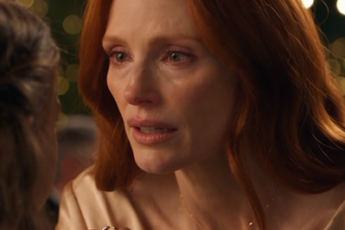
For several seconds, I couldn’t move.
People kept talking around me, but their voices sounded distant. All I could see were the documents my grandfather, Edward, had just placed in my hands.
The first was an insurance policy in my name.
Another document listed my husband, Daniel.
Then I found something else.
A reservation.
It was for three people: two adults and one child. The trip was scheduled for a few days later, at a place far from the city.
I had never heard about it.
Slowly, I raised my eyes.
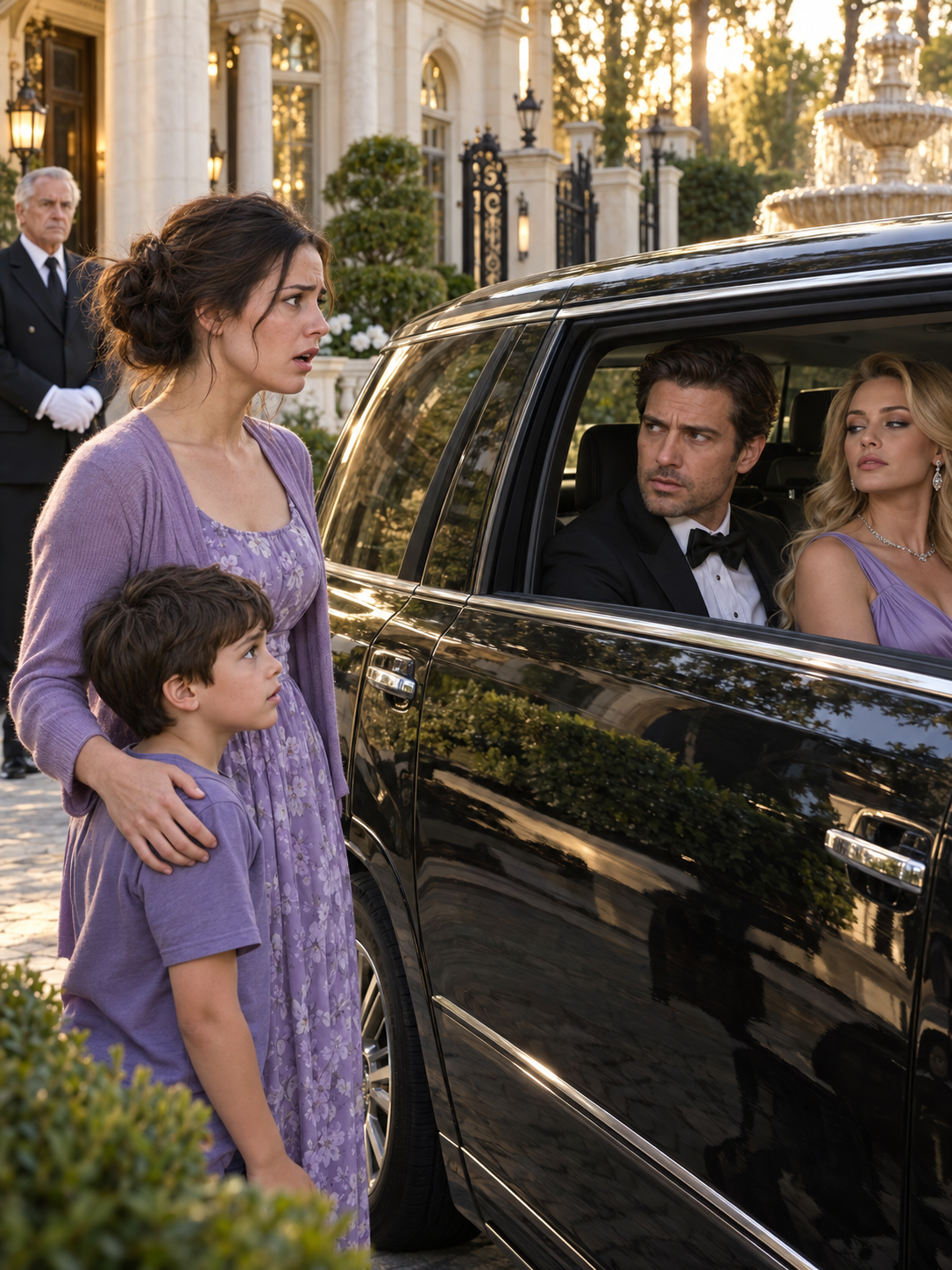
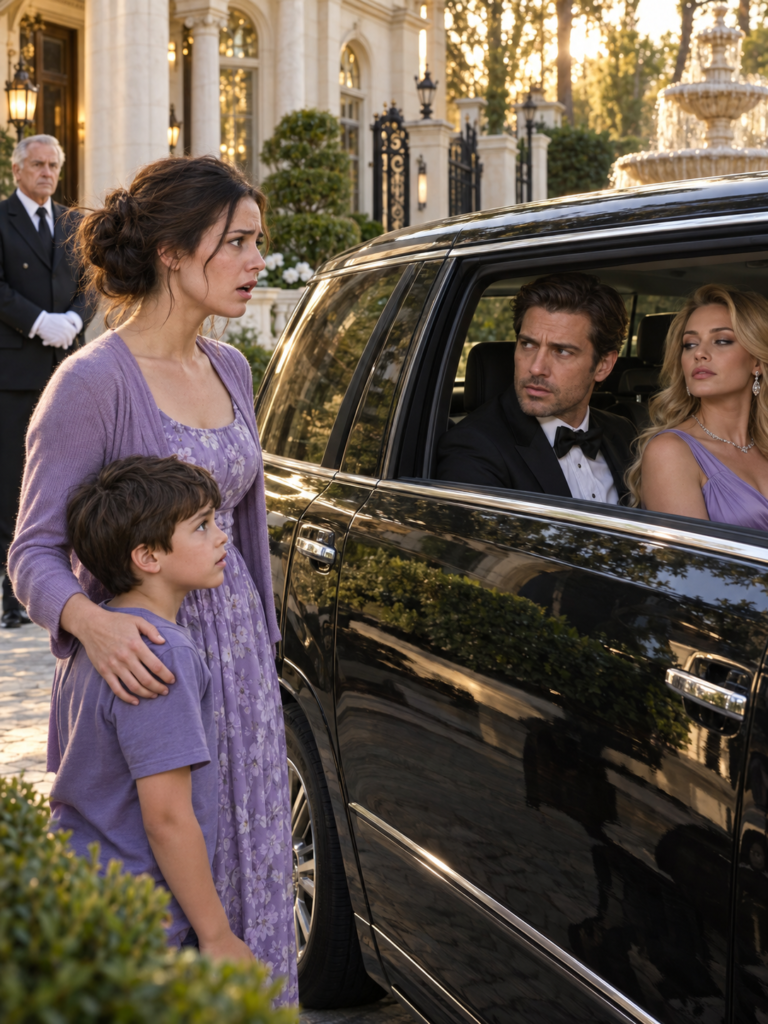
Daniel stood a few feet away from me in the driveway of the enormous property I had believed was gone from my life years ago.
“Can you explain what I’m looking at?”
His expression barely changed.
Barely.
But after so many years with him, I knew every small sign. The slight tightening of his jaw told me everything.
He was worried.
“Claire, don’t jump to conclusions.”
My grandfather stepped closer.
“Then give us an explanation that makes sense.”
Daniel nervously adjusted his sleeve.
“I was arranging a few things for the family. That’s all.”
One of the professionals reviewing the paperwork looked up.
“Did your wife know about these arrangements?”
Daniel hesitated.
“I was going to tell her.”
“When?”
He said nothing.
“And the reservation?”
“It was supposed to be a surprise.”
I looked down at the papers again.
It didn’t feel like a surprise.
It felt like another decision about my life had been made without me.
The authorities, who were already there to clarify the legal status of the property, asked Daniel to come with them and answer several questions. His mother, Patricia, immediately stepped in.
“You’re mistaken. My son hasn’t done anything wrong!”
They calmly explained that no conclusions would be made until every document had been reviewed.
But Daniel wasn’t looking at them.
He was looking at me.
And suddenly, I understood why.
He was waiting for me to defend him.
Just like always.
For years, I had made excuses for every one of his failures. When he lost a job, I told people he had simply been unlucky. When money was tight, I wondered what I had done wrong.
Whenever our son Lucas asked why his father was rarely home, I told him Daniel was working hard for our future.
And every time I asked questions about our finances, the conversation ended in the same strange way: I was the one who felt guilty for doubting him.
Over time, I began to question my own judgment.
But that morning, standing in front of the house that should have been mine for so long, something inside me changed.
I didn’t need to save him anymore.
“Claire…”
Daniel took a step toward me.
“Let me fix this.”
Lucas’s small hand slipped into mine.
I looked down at him. His backpack had been repaired more times than I could count. His shoes had needed replacing for weeks. That morning, we had shared a very simple breakfast because I had to wait a few more days before I could afford a proper grocery trip.
Then I looked around.
The swimming pool.
The flowers.
The tables prepared for a ceremony.
The elegant decorations.
All that luxury was inside a property that, according to my grandfather’s documents, had belonged to me for years.
“Did you know how we were living?” I asked.
Daniel looked away.
“I was going to take care of it.”
“When?”
He stayed silent.
Then my eyes moved to the decorations prepared for his wedding to another woman.
“After today?”
Sophie, the woman Daniel was supposed to marry just hours later, turned sharply toward him.
Daniel lowered his voice.
“I never wanted Lucas to go without anything.”
I tightened my grip on my son’s hand.
“But he did.”
I didn’t raise my voice. I didn’t even want to.
“And you knew it.”
That realization hurt more than anger ever could.
For a long time, I had believed our struggles were simply caused by bad circumstances: the bills I calculated again and again, the personal belongings I sold, the expenses I kept postponing, the questions from Lucas that I answered with made-up excuses.
Daniel knew exactly what our life was like.
And still, nothing changed.
When he was asked to leave so the investigation could continue, Patricia protested again. Sophie remained near the entrance.
A few minutes later, she came over to me with something in her palm.
The moment I saw it, I stopped breathing.
It was a small blue pendant.
My mother’s pendant.
I had believed it was lost for years.
“Daniel gave it to me,” Sophie said. “He told me it belonged to his family.”
I took the necklace carefully. Its financial value meant nothing to me. My mother had given it to me, and I never thought I would see it again.
“I didn’t know,” Sophie added.
I looked at her.
“I believe you.”
She was quiet for a moment.
“He also told me you had left by choice,” she said. “He said your marriage had ended a long time ago and that you wanted nothing to do with him.”
I closed my eyes for a second.
Another piece of the puzzle had fallen into place.
Daniel hadn’t only hidden what was happening with the property. He had told different versions of my life to different people.
“I’m sorry,” Sophie whispered.
“So am I.”
She looked toward the entrance decorated for a wedding that would never happen. Then she removed her ring, placed it on a small table beside the flowers, and walked away.
There was no wedding that day.
The weeks that followed were spent uncovering what had really happened. Professionals examined the property records and several financial transactions connected to our family.
Slowly, irregularities began to appear.
Resources had been used without my knowledge. Some documents required further investigation. I chose not to make assumptions and allowed qualified people to determine the truth.
The investigation lasted several months.
There was no evidence that Daniel had intended to physically harm me. However, several financial irregularities were confirmed. Some of the information in the files was inaccurate, and multiple transactions had been carried out without proper authorization.
Daniel had to answer for what could actually be proven.
Patricia was not held responsible for everything her son had done, but she had to return part of the money she had received without having any right to it.
For the first time in a very long time, events were no longer controlled by Daniel’s stories.
They were controlled by facts.
A few days after the canceled wedding, my grandfather asked me to meet him in the library.
Edward stood beside a large window. Suddenly, he looked much older.
“I should have understood,” he said.
“Grandpa…”
He shook his head.
“I gave you that house and thought it was enough. I believed I had given you security, but I never checked whether you were truly happy here.”
“Daniel kept us apart.”
My grandfather lowered his eyes.
“And I let him.”
Then he told me what Daniel had said to him: that I didn’t want to see him, that I was angry because he didn’t approve of my marriage.
I was speechless.
“Daniel told me you never wanted to hear about me again,” I said. “He told me I had to choose between the two of you.”
We looked at each other in silence.
For almost two years, each of us had believed the other had chosen to stay away.
I crossed the room and wrapped my arms around my grandfather.
“I thought I had lost you,” he whispered.
“Never.”
That afternoon, I took Lucas upstairs to see the rest of the house. He had never lived anywhere so large. He climbed the stairs slowly, counting every step.
At the top, I opened a door.
Inside was a bright bedroom overlooking the garden.
Lucas walked in carefully. He looked at the windows, the pale walls, and the huge closet.
“Mom?”
“Yes?”
“Whose room is this?”
I knelt in front of him.
“Yours, if you want it.”
His eyes widened.
“All of it?”
I smiled.
“All of it.”
He ran to open the closet.
“Can I put my toys in here?”
“Of course.”
He thought about it very seriously.
“All of them?”
“All of them.”
He looked at the empty space.
“Then there’s going to be a lot of room left.”
I had to hold back my tears. My son had grown so used to having very little that an empty closet seemed enormous to him.
“Maybe we can buy a few more toys over time.”
His face lit up.
“A new dinosaur?”
“One dinosaur sounds reasonable.”
“Three?”
I raised an eyebrow.
“You learn quickly.”
Lucas burst out laughing. My grandfather heard him from downstairs.
That laugh was the true beginning of our new life.
A few months later, I went back to school. I had given up my education years before. Edward offered to pay for everything, but I wanted to rebuild my independence.
I chose to study business management and accounting.
I wanted to understand every document with my name on it. I wanted to know how my money was being handled and what decisions were being made for Lucas’s future.
At last, I understood that trusting someone does not mean giving up the right to understand what affects your life.
Two years later, I earned my degree.
Lucas sat in the front row wearing a small crooked tie. Edward sat beside him.
When they announced my name, my son jumped out of his chair.
“THAT’S MY MOM!”
People around him laughed.
And this time, I laughed with them.
There was nothing humiliating about it. It was pure joy.
Later, I used part of the property to create a project focused on financial education and support for people who wanted to regain their independence after a period of economic dependence.
We organized budgeting workshops, meetings with specialists, and practical support sessions.
Edward helped us get started. After that, I worked to make sure the project could stand on its own.
Still, there was one place I refused to erase from our story: the small house where Lucas and I had lived through the difficult years.
My grandfather wanted to forget it. I chose to keep the land.
Not to celebrate our pain, but to remember how far we had come.
Years later, I returned there with Lucas. He was old enough by then to ask questions I would not have known how to answer when he was five.
He looked at the aging building.
“Did we really live here?”
“Yes.”
“Just the two of us?”
“Just the two of us.”
He was quiet for a moment.
“We didn’t have much money, did we?”
“Not at that time.”
He looked at the small garden.
“Were we unhappy?”
The question surprised me.
I remembered the nights of worry. But I also remembered bedtime stories, tiny birthday cakes, improvised dinners, and the nights when Lucas fell asleep against me while rain tapped against the roof.
“Not all the time,” I said.
He took my hand.
“Then why didn’t Edward give us the big house sooner?”
I smiled gently.
“He did.”
Lucas frowned.
I squeezed his hand.
“The problem was that I eventually believed someone who told me that what belonged to me no longer existed.”
We returned before nightfall.
When the large gates opened, Lucas ran toward the house. Edward had promised him a rematch at chess after dinner.
I stood alone in the driveway for a few seconds.
Years earlier, I had looked at that property believing it belonged to a life that was impossible for me.
Now I knew the truth.
My name was on the documents. My mother’s pendant was around my neck again. My son was laughing somewhere inside the house. And my grandfather was waiting for us.
But the house was never the most important thing.
For too long, I had believed that surviving one more day was already a victory. I had forgotten that I could build something new, too.
Everything changed because of one simple question.
The day Edward discovered the conditions Lucas and I were living in, he asked me what had happened to the house he had given me.
That question opened a door that years of silence had kept shut.
It taught me something I would never forget: when a truth directly affects our own lives, we have the right to ask questions.
That night, I went upstairs to Lucas’s room.
He was almost asleep.
“Mom?”
“Yes?”
“Are we going to live here forever?”
I looked at his books, his toys, and his many dinosaurs—far more than the number we had originally agreed on.
Then I looked at my son.
“I don’t know where we will live forever. But as long as we are together, take care of each other, and can live without fear, we will have a home.”
Lucas smiled and closed his eyes.
When I went downstairs, I found Edward in the kitchen with two cups of tea.
I sat beside him.
The house was quiet.
For the first time in years, that silence did not feel like the waiting room for bad news.
It felt like peace.
And I finally understood that coming home does not simply mean walking through the door of a house with your name on it.
It means arriving somewhere no one forces you to doubt your own reality.
That night, for the first time in a very long time, I knew exactly where I belonged.
I was home.