The afternoon crowd moved slowly through the city park as Marcus Reed crossed the path beside the flower garden.
He was nearly at the gate when a child’s voice called out behind him.
“Excuse me! You left this on the bench!”
Marcus turned.
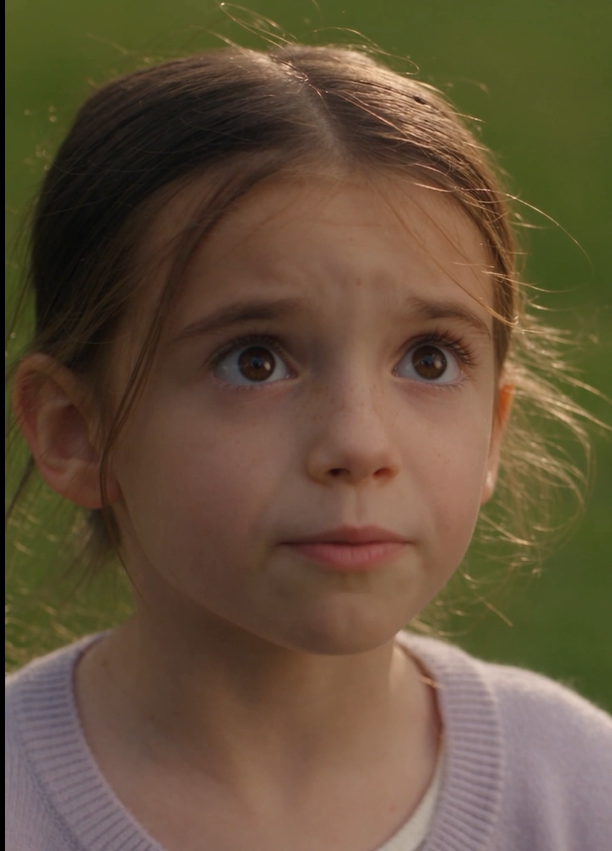
A girl around eight years old stood a few steps away, holding a small leather photo case. Her dark hair was gathered in a ponytail, and a bright red sand pail swung from her wrist.
Marcus recognized the case immediately. It had slipped from his coat pocket without him noticing.
“Thank you,” he said, taking it carefully. “I would have been looking for that all evening.”
The girl smiled. “My mom says you should always return things that don’t belong to you.”
Marcus opened the case. Inside was the one photograph he had carried for years: a picture of himself and a young woman standing beside the sea, both laughing at something outside the frame.
The child leaned closer, then grew quiet.
“Why do you have a picture of my mom?”
Marcus looked at her.
“What did you say?”
She pointed at the photograph.
“That’s my mother.”
For a moment, the sounds of the park seemed to fade. Marcus stared at the picture again, then at the girl’s face.
“That woman is your mother?”
“Yes,” the girl replied. “Her name is Nora.”
Marcus could barely breathe.
Nora had vanished twelve years earlier. After a stormy night and a confusing chain of events, everyone had assumed she was gone. No clear explanation had ever been found, and eventually Marcus had been left with only silence, questions, and the photograph in his hands.
“Is she here?” he asked softly.
The girl nodded toward a café kiosk across the lawn.
“She’s getting lemonade.”
Marcus followed her gaze.
A woman had just turned from the counter.
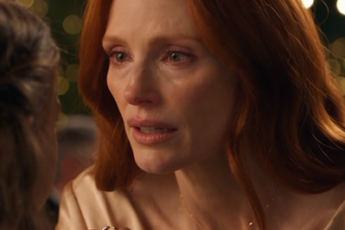
Her hair was shorter than he remembered. Time had softened some features and added fine lines around her eyes. Yet he knew her immediately.
Nora.
The paper cup slipped from her hand as she saw him.
Neither of them moved.
Twelve years had passed, but the distance between them suddenly felt much smaller than the years they had lost.
Marcus approached slowly.
“You’re here,” he said.
Nora’s expression filled with shock and fear.
“Marcus…”
Their daughter—because that was how Nora introduced her—looked from one adult to the other.
“Mom, he has your picture.”
Nora gently sent the girl to play near the fountain, where she could remain in sight. Only when the child had walked away did Marcus finally ask the question that had lived inside him for more than a decade.
“Why did you disappear?”
Nora sat on a nearby bench. Her hands trembled slightly, but her voice was steady.
“Your father came to see me shortly before I left,” she said. “He believed I was distracting you from the future he had planned for you. He told me that if I stayed, he would make sure our lives became unbearable.”
Marcus listened in silence.
His father had been strict, demanding, and deeply concerned with appearances. Marcus had always known he disapproved of Nora, but he had never understood how far that disapproval had gone.
“I was young and frightened,” Nora continued. “I thought leaving was the only way to protect you from a conflict that would never end.”
“You could have told me.”
“I should have,” she said. “That is the truth. I made a terrible decision, and every year afterward made it harder to correct.”
Nora explained that she had moved away, taken work under a different name, and tried to build a quiet life. Years later, she met a little girl named Maya at the community center where she volunteered.
Maya had lost the adults who once cared for her and needed a stable home. Nora became her guardian, and eventually, Maya became her daughter in every way that mattered.
Marcus watched Maya near the fountain, filling her red pail with fallen leaves.
“She found me today,” he said.
Nora looked toward the child. “She has a way of finding people who need help.”
Marcus wanted to feel only anger. There was plenty of it. He had spent years wondering whether he had done something wrong, whether he could have prevented Nora’s disappearance, whether love had simply failed him without warning.
But Nora was standing in front of him, no longer a memory. She was a person carrying her own regret.
“My father has been gone for years,” Marcus said.
“I know.”
“Then why didn’t you come back?”
Nora lowered her eyes.
“At first, I told myself I would return when things felt safe. Later, I convinced myself you had moved on. Eventually, I was ashamed. I knew I had caused you pain, and I didn’t know whether you would ever want to see me again.”
Marcus had no answer.
He left the park without another word.
That evening, Nora sat at her kitchen table while Maya finished a drawing nearby.
“Was that man from the picture?” Maya asked.
“Yes.”
“Was he important to you?”
Nora looked toward the window.
“He was.”
Maya considered that for a moment.
“He looked sad.”
Nora nodded. “I know.”
Several hours later, the doorbell rang.
Marcus stood outside holding the old photograph.
“I don’t know what comes next,” he told Nora. “I’m hurt, and I need time. But I don’t want another twelve years of silence.”
Nora’s eyes filled with tears.
“I don’t expect you to forget,” she said. “I only hope I can finally be honest.”
Their conversation did not fix everything in one night.
It took months.
They met for coffee, then for walks. They spoke about the past when it was difficult and about ordinary things when it was not. Marcus asked questions that Nora answered without avoiding them. Some days were tense. Other days were unexpectedly peaceful.
Maya became part of those meetings almost by accident.
She invited Marcus to watch her school play. He helped her repair a paper kite that refused to stay in the air. Once, he tried to make breakfast and managed to burn every pancake in the pan.
Maya looked at the blackened stack and said, “You’re very good at business, but maybe not at cooking.”
Marcus laughed for the first time in a long while.
Over time, Maya began calling him “Photo Case Man,” a nickname she found endlessly amusing. Marcus pretended to dislike it, but he never asked her to stop.
One winter afternoon, Maya slipped on an icy walkway outside the library. Marcus caught her before she fell.
“Thank you, Dad,” she said automatically.
They both froze.
Maya looked down, embarrassed. “Sorry. I didn’t mean—”
Marcus crouched beside her.
“You don’t have to be sorry,” he said.
He did not make a promise too large for the moment. He simply offered his hand, and Maya held it as they walked home.
A year after their unexpected meeting, Marcus asked Nora and Maya to return to the same park.
Maya ran ahead with the familiar red pail, now scratched and faded from use. Nora sat beside Marcus on the bench where the lost photo case had been returned.
Marcus opened it.
The old photograph was no longer inside.
In its place was a new one: Marcus, Nora, and Maya standing together beneath autumn trees.
Nora covered her mouth.
Marcus looked at her.
“I can’t change what happened,” he said. “I can’t recover the years we lost. But I’ve learned that a new beginning doesn’t have to erase the past. It can grow from it.”
Then he turned to Maya.
“And sometimes, a small act of kindness brings people together who never expected to meet.”
Maya smiled. “That means I did a good job.”
“You did an extraordinary job,” Marcus said.
Nora laughed through tears.
Marcus reached for Nora’s hand.
“I don’t want us to return to the life we once had,” he said. “I want us to build something better—slowly, honestly, and together.”
Nora nodded.
“Yes,” she whispered.
Maya raised both arms in celebration.
“I knew you would say yes!”
The three of them laughed beneath the trees.
The photo case stayed with Marcus after that day, but it was no longer a symbol of what had been lost. It became a reminder that life can change direction in the smallest moment: a child notices something left behind, chooses to return it, and opens a door that no one expected to find.