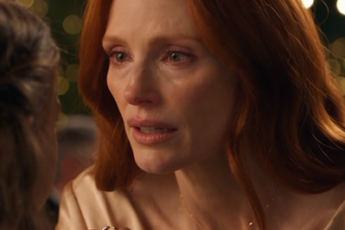
When I finally became pregnant, Mark and I thought the hardest part of our story was behind us.
We had been married for three years and had spent much of that time hoping to become parents. So when the pregnancy test finally showed two lines, Mark picked me up in the kitchen and spun me around until I begged him to put me down.
For months, our home filled with plans.
We argued playfully over baby names.
Mark assembled the crib far too early and then spent another weekend rebuilding it because he was convinced he’d done it incorrectly.
At night, he would place his hand against my stomach and talk to our unborn daughter as though she could already understand him.
Then, during my sixth month of pregnancy, everything changed.
Mark had been feeling unusually tired for weeks. At first, we blamed work and the stress of preparing for the baby.
Medical appointments eventually revealed something far more serious.
His condition was advanced.
The doctors were careful not to make exact promises about time, but they made it clear that his future was suddenly much shorter and more uncertain than either of us had imagined.
I remember sitting beside him after one appointment, unable to speak.
Mark was the one who reached for my hand.
“We’re going home,” he said quietly.
That evening, we sat together on our porch.
My daughter shifted inside me, and Mark rested his palm gently against my belly.
For a long time, neither of us said anything.
Then he told me he had been thinking about organ donation.
“If it’s medically possible when the time comes,” he said, “I want to help someone.”
I immediately looked away.
I couldn’t stand hearing him speak about a future in which he wasn’t beside me.
“Can we not talk about this tonight?”
“We need to.”
“Mark—”
“I know.”
He squeezed my hand.
“But if there’s something useful that can come from all of this, I want that choice documented.”
I began crying.
He didn’t tell me to stop.
He simply sat beside me until I could breathe normally again.
Over the following weeks, Mark became weaker.
Our life gradually reorganized itself around appointments, rest, and trying to make ordinary moments feel ordinary.
Some mornings were almost normal.
Other days, walking across the house exhausted him.
I helped him with things he once did without thinking, and he apologized every time.
Eventually, I made him promise to stop apologizing.
“You’d do this for me,” I told him.
“Without hesitation.”
“Then let me do it for you.”
One thing, however, began bothering me.
Mark started asking to speak privately with his physician.
The first time, I thought nothing of it.
Then it happened again.
And again.
Whenever I asked what they were discussing, Mark gave me the same answer.
“I’m arranging something.”
“What?”
“You’ll know later.”
We had never been people who kept secrets from each other.
Under different circumstances, I might have pushed harder.
But Mark had lost control over so much of his life that I decided he deserved control over this one thing.
So I trusted him.
As my pregnancy entered its final weeks, his health declined further.
Eventually, he was admitted to the hospital.
I spent as much time beside him as I could.
We talked about our daughter.
Mark asked me to tell her about the terrible jokes he told.
He wanted her to know that he’d bought her first stuffed animal.
He made me promise not to tell her he had cried while assembling the crib.
“You absolutely cried.”
“It was dust.”
“There was no dust.”
“Then the instructions were emotionally overwhelming.”
Even then, he could make me laugh.
Those moments became precious because both of us understood there might not be many left.
When Mark died, I was holding his hand.
There was no dramatic final speech.
Just a quiet goodbye between two people who weren’t ready for one.
The hours afterward blurred together.
Hospital staff guided me through what needed to happen next, including the established process related to Mark’s documented donation wishes. Medical professionals handled the eligibility and consent requirements; there was nothing simple or automatic about it.
I remember thinking that Mark would have been relieved that his wishes were being respected where medically possible.
Eventually, there was nothing left for me to do at the hospital.
I gathered my coat and bag and started toward the elevator.
I had almost reached it when someone called my name.
Mark’s physician was walking quickly toward me.
“Please wait.”
I turned.
He was carrying a sealed envelope.
For a moment, I assumed it was another hospital document.
Then I noticed my name written across the front.
In Mark’s handwriting.
My knees nearly gave way.
“What is that?”
The doctor stopped in front of me.
“Mark gave this to me several weeks ago.”
I stared at the envelope.
“He asked me to keep it?”
“Yes.”
“Why?”
“He wanted you to receive it only after he was gone.”
I couldn’t bring myself to take it immediately.
All those private conversations suddenly made sense.
“This is what you two were arranging?”
“Part of it.”
Part of it.
Those two words caught my attention.
“What else was there?”
The doctor hesitated.
“Read the letter first.”
I took the envelope.
Mark had written my name exactly the way he always did, with the final letter slightly higher than the others.
Seeing that tiny familiar detail broke something inside me.
I sat on a bench near the elevator and opened it.
The first line was simple.
If you’re reading this, then I didn’t get enough time.
I covered my mouth.
For several minutes, I couldn’t continue.
Then I forced myself to read.
Mark wrote that there were thousands of things he wanted to say but knew I would remember most of them without a letter.
He didn’t want the message to be another goodbye.
Instead, he wanted to leave something for our daughter.
He had recorded a collection of messages for future milestones.
Not hundreds.
Not one for every day of her life.
Just a handful for moments he desperately wished he could witness himself.
Her first birthday.
Her first day of school.
A difficult day when she might need to hear that failing at something didn’t make her a failure.
Her eighteenth birthday.
And one final recording to be watched whenever she was old enough to ask what kind of man her father had been.
I looked up at the doctor through tears.
“There are videos?”
He nodded.
“Mark asked for help making sure they were securely delivered to you.”
My hands began shaking again.
Then I reached the final paragraph of the letter.
It wasn’t about death.
It wasn’t even about Mark.
It was about me.
He wrote that he knew I would be tempted to build my entire future around preserving his memory.
He didn’t want that.
He wanted our daughter to know him.
But he wanted me to continue living.
To laugh without guilt.
To raise our child without feeling that every happy day somehow betrayed the husband who wasn’t there to share it.
And someday, if life brought another person into my world, Mark didn’t want his memory used as a locked door.
The final sentence was the hardest.
Tell our little girl I loved her before I ever saw her face. And tell yourself that loving me does not require you to stop living.
I pressed the letter against my chest.
For weeks, I had believed Mark’s secret conversations with his doctor were about medical decisions.
Some of them were.
But Mark had also been planning something else.
He knew he might never hold our daughter.
So he had found a way to leave behind pieces of his voice.
Our daughter was born several weeks later.
She had Mark’s eyebrows.
The first time I noticed them, I laughed and cried at the same time.
I didn’t immediately play all of his recordings.
I couldn’t.
Instead, I saved them for the moments Mark had intended.
On our daughter’s first birthday, after the guests had gone home and the house became quiet, I opened the first one.
Mark appeared on the screen looking tired but smiling.
For a second, I couldn’t breathe.
Then he began talking to the little girl he had never gotten to meet.
Our daughter sat in my lap, far too young to understand the words.
Halfway through, she reached toward the screen.
I held her a little tighter.
Mark’s decision to become a donor had been one way of trying to give something meaningful beyond his own lifetime.
The recordings were another.
But the greatest thing he left me wasn’t hidden in a hospital envelope.
It was permission.
Permission to remember him without living entirely in the past.
Permission to grieve without making grief my identity.
And permission to teach our daughter that although her father didn’t get enough time with us, the love he had for her began long before she ever opened her eyes.