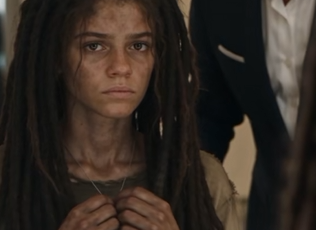
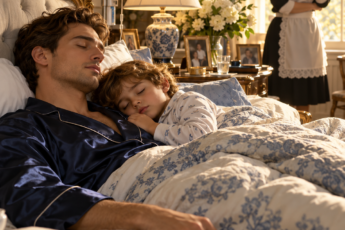
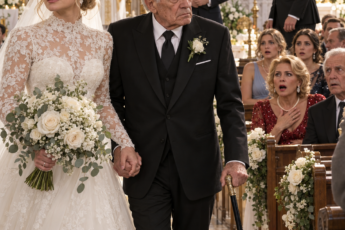
The night ten-year-old Noah Bennett entered the grand ballroom of the Ashford Imperial Hotel, he carried an old photograph, a worn blue notebook, and a secret that could change a millionaire’s life forever.
He wore a faded brown jacket and shoes that had seen better days. Around him, wealthy guests admired sparkling chandeliers, expensive jewelry, and magnificent flower arrangements.
Noah had no invitation.
He had come for one person.
Victoria Ashford.
At thirty-eight, Victoria was among New York’s wealthiest businesswomen. She owned luxury hotels, valuable properties, and a charitable foundation that supported disadvantaged families.
Yet none of her fortune could erase the grief she carried.
Five years earlier, a terrible automobile accident outside Boston had taken the life of her husband, Daniel, and left her with serious spinal injuries.
She had spent months undergoing treatment and rehabilitation. There had been moments of progress, followed by painful setbacks.
Eventually, her personal physician, Dr. Richard Collins, encouraged her to accept that further improvement might be limited.
Her younger brother Charles agreed.
“You’ve suffered enough, Victoria,” he frequently told her. “Stop chasing impossible expectations.”
Gradually, she stopped asking questions.
She continued using her wheelchair and allowed Charles to manage much of the family business.
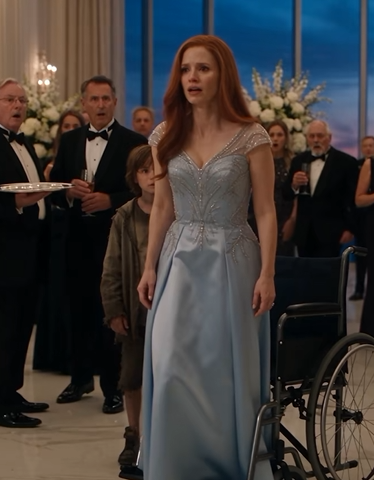
That evening, while the Ashford Foundation celebrated a twenty-million-dollar charitable initiative, Victoria sat quietly beside a tall window.
Beyond the glass, Manhattan glittered beneath the October sky.
Everyone praised her generosity.
Almost nobody noticed her loneliness.
“Excuse me, ma’am.”
Victoria turned toward the unfamiliar voice.
A small boy stood beside her wheelchair.
“Hello,” she answered. “Are you lost?”
“No.”
“Are you looking for someone?”
“Yes. You.”
Victoria studied him curiously.
“My name is Noah,” he explained. “I came because I think there’s something you deserve to know.”
“What would that be?”
He glanced toward her legs.
“My mother believed you might still be able to improve.”
Victoria’s expression softened.
“Sweetheart, I’ve been in this wheelchair for years. Recovery isn’t that simple.”
“I know,” Noah replied. “Mom never said it was.”
He reached into his jacket and produced a photograph.
Victoria accepted it.
The picture showed her standing in a hospital garden beside Daniel. They were smiling, and a young nurse stood nearby.
Victoria recognized the woman immediately.
“Emily Bennett?”
Noah nodded.
“That’s my mother.”
Victoria’s breath caught.
Emily had cared for her during the earliest months after the accident. She had been patient, compassionate, and determined to celebrate even the smallest progress.
Then Emily had unexpectedly disappeared from the hospital.
“Where is she now?” Victoria asked.
Noah lowered his gaze.
“She died last winter.”
Victoria covered her mouth.
“I’m so sorry.”
He nodded sadly.
“Before she died, she asked me to find you.”
“Why?”
“Because she thought someone had kept important information from you.”
Before Victoria could respond, Charles approached.
“What’s going on here?”
His eyes moved toward the photograph.
The color drained from his face.
“Where did you get that?”
“My mother gave it to me,” Noah answered.
“Who was your mother?”
“Emily Bennett.”
Charles became visibly tense.
“Victoria, this child shouldn’t be here. We need security.”
“Charles, stop,” she said firmly.
“You don’t know what he wants.”
“He wants to talk to me.”
Charles reached toward the photograph.
Victoria pulled it away.
“Enough. I can decide whom I speak to.”
For the first time that evening, her brother fell silent.
Noah opened his blue notebook.
“My mother kept records from when she worked at the hospital.”
Victoria recognized Emily’s handwriting immediately.
The pages contained dates, observations, and notes about her early rehabilitation.
Emily had documented muscle responses and small movements that appeared to justify further medical assessment.
Another rehabilitation specialist had reportedly recommended additional evaluations.
Victoria turned the pages slowly.
“I remember some of these sessions,” she whispered.
She recalled the excitement of moving her toes and briefly supporting part of her weight.
But those possibilities had gradually disappeared from discussions about her care.
“Why wasn’t I told about these recommendations?”
Charles crossed his arms.
“Your doctors knew what they were doing.”
“Then they shouldn’t object to another opinion.”
“Victoria, please don’t embarrass yourself.”
She looked directly at him.
“I’m not embarrassed by asking questions.”
Noah stepped closer.
“My mother never promised you would walk again. She only believed you deserved to know what the doctors had observed.”
Those words affected Victoria more than any promise of a miracle.
She had spent years being told what she could not do.
Perhaps it was time to discover what she could.
With the assistance of qualified medical staff attending the event, Victoria cautiously explored the movement she could still control.
She felt pressure through her feet.
After appropriate checks and with trained professionals supporting her, she attempted a brief rise from her wheelchair.
Her arms trembled.
Her knees felt unsteady.
But for a few seconds, she managed to bear some weight through her legs.
“I’m standing,” she whispered.
The guests nearby fell silent.
Tears filled her eyes.
The medical staff helped her sit safely again.
It was not a cure.
It did not establish how much mobility she could recover.
But it gave her a reason to seek a complete independent evaluation.
Noah smiled.
“You did something you thought you couldn’t.”
Victoria nodded.
“And now I want to understand why.”
Charles returned, visibly upset.
“This has gone far enough.”
Victoria looked at him.
“Why does the possibility of another medical opinion frighten you?”
“It doesn’t. I’m protecting you.”
“Then let me make my own decisions.”
Noah quietly handed her an envelope.
On the front, in Emily’s familiar handwriting, were the words:
For Victoria. When Ready.
Inside was a letter and a small silver key.
Victoria began reading.
Emily explained that she had documented signs of neurological recovery deserving further investigation. Her recommendations had apparently disappeared from the medical records available to Victoria.
When Emily questioned the situation, she was removed from Victoria’s care.
She had attempted to send letters afterward, but they were returned.
I cannot promise that you will walk independently, Emily wrote. But I believe you deserve an honest assessment and the right to choose your treatment.
Victoria lowered the letter.
She looked toward Charles.
“Did you know Emily tried to contact me?”
He hesitated.
“She was giving you unrealistic expectations.”
“That isn’t what I asked.”
Dr. Richard Collins appeared nearby.
Victoria turned toward him.
“Did you receive Emily’s reports?”
The physician looked uncomfortable.
“Medical documentation can be complicated.”
“Did you receive them?”
He glanced briefly at Charles.
Victoria noticed.
Her hands tightened around the letter.
For five years, she had trusted these men to act in her best interests.
Now she had serious questions.
She instructed her legal advisers to preserve her medical and business records and arrange an independent investigation.
Until the matter could be reviewed, Charles and Dr. Collins would no longer make decisions on her behalf.
Charles protested.
Victoria remained calm.
“I am not declaring anyone guilty. I am asking for the truth.”
Noah pointed toward the silver key.
“That opens my mother’s storage box. She kept copies of her letters and medical notes.”
Victoria thanked him.
Then another photograph slipped from the notebook.
She picked it up.
The picture showed Emily standing outside a children’s hospital beside Daniel.
Daniel held a newborn wrapped in a yellow blanket.
Victoria stared.
“When was this taken?”
“The day I was born,” Noah answered.
She turned the photograph over.
Daniel’s handwriting covered the back.
For Noah. May you always know how much you are loved.
Victoria looked at the boy.
“Daniel knew you?”
“He helped my mother when she was pregnant. She was very sick, and she couldn’t afford the treatment she needed.”
Victoria remembered how Daniel had always helped people quietly.
He disliked publicity and believed kindness should never make someone feel indebted.
“Why didn’t he tell me?”
“Mom said he was planning to. But then the accident happened.”
Victoria recalled a conversation shortly before Daniel died.
He had mentioned a surprise.
Something he hoped would give them a new reason to believe in the future.
Now she wondered whether Noah had been part of that surprise.
“Who takes care of you now?” she asked gently.
“My grandmother did, but she died in the spring.”
“And where do you live?”
“At a children’s shelter.”
Victoria felt her heart ache.
This little boy had lost so much.
Yet he had crossed the city to deliver his mother’s message without asking for anything.
“Why did you come all this way?”
Noah looked at Daniel’s photograph.
“Mom said your husband helped us when nobody else could. She wanted me to do something kind for you.”
Victoria held out her arms.
“May I hug you?”
He nodded.
She embraced him gently.
For the first time that evening, she no longer felt alone.
But Noah had another envelope.
This one was addressed to him.
He asked Victoria to read it aloud.
Emily’s letter revealed that Daniel had been among the first people to hold Noah after his birth.
Daniel and Victoria had dreamed of becoming parents for years, but their hopes had never been fulfilled.
Helping Emily had reminded Daniel that families could begin in unexpected ways.
He had asked to become Noah’s godfather.
Emily had agreed.
Daniel promised that if Emily ever needed help raising her son, he would do everything possible to support them.
He died before he could fulfill that promise.
Emily ended her letter with a message for Noah:
You are not a burden. You deserve kindness, stability, and a family that loves you. If Victoria welcomes you into her life, do not be afraid to accept that love.
Victoria could barely finish reading.
Noah looked up.
“Was Daniel really my godfather?”
“Yes, sweetheart.”
“Do you think he would have liked me?”
Victoria smiled through her tears.
“I believe he would have loved you very much.”
Noah leaned into her embrace.
And in a ballroom filled with extraordinary wealth, they found something neither money nor influence could guarantee.
A sense of belonging.
Three days later, Victoria entered an independent rehabilitation center.
Her new specialists carefully reviewed her condition.
They confirmed that her injuries were serious and that years of reduced activity had weakened her muscles.
Her balance and neurological function remained impaired.
There would be no instant recovery.
But she retained more movement than some earlier assessments had suggested.
A carefully supervised rehabilitation program could help her improve her strength and mobility.
Victoria accepted the uncertainty.
She no longer needed guarantees.
She wanted the opportunity to make informed decisions.
Meanwhile, legal investigators examined Emily’s preserved documents and Victoria’s business records.
They discovered evidence suggesting that Charles had restricted access to independent medical opinions while expanding his authority over family companies.
Several financial transactions also required further scrutiny.
Dr. Collins’s professional relationship with Charles became part of the investigation, and he was suspended pending review.
Victoria regained direct control over her foundation and appointed independent advisers.
The legal process would continue for months.
But she was no longer powerless.
Noah began visiting the rehabilitation center every Saturday.
Sometimes he brought drawings.
Sometimes he brought books.
Other times, he simply sat beside Victoria and told her about school.
One afternoon, after a difficult session, she sighed.
“I think I’ve reached my limit.”
Noah looked up.
“For today?”
She smiled.
“Yes. For today.”
“Then tomorrow might be different.”
Victoria laughed.
“Your mother taught you that, didn’t she?”
He nodded.
“She said resting doesn’t mean giving up.”
As the months passed, Victoria gradually improved her ability to stand and take short steps with appropriate support.
She continued using her wheelchair whenever necessary.
Noah never treated that as a disappointment.
He cared about her happiness, not how far she could walk.
Victoria also began working with child welfare professionals to become Noah’s legal guardian.
The process involved interviews, home visits, and careful consideration of his needs.
She respected every step.
When the arrangements were approved, Noah could hardly believe it.
“You mean I can live with you?”
“If that’s what you want,” Victoria answered.
“For how long?”
She took his hands.
“I want you to have a stable home for as long as you need one.”
He hugged her tightly.
And the Ashford mansion, silent for years, slowly became a home again.
One year after their first meeting, the Ashford Foundation hosted another gala.
Victoria announced the opening of the Emily Bennett Center for Hope, a facility offering independent medical assessments, rehabilitation, counseling, and family support.
Standing with appropriate assistance, she addressed the audience.
“One year ago, a little boy came into this ballroom carrying his mother’s notebook.”
She looked toward Noah in the front row.
“He didn’t bring me a miracle cure. He brought me information, courage, and a reminder that I had the right to hope.”
The audience applauded.
Victoria invited Noah onto the stage.
She presented him with Daniel’s silver wristwatch.
Engraved on the back were five words:
You’re not alone anymore.
Noah’s eyes filled with tears.
Then he gave Victoria a drawing.
It showed a red-haired woman, a dark-haired boy, a wheelchair, and a house surrounded by flowers.
Across the top, he had written:
MY FOREVER FAMILY.
He also handed her a copy of the court order confirming her permanent guardianship.
Beneath it was a handwritten note.
You gave me a home, someone who listens, and a place where I feel safe. I still miss my mother, but I think she would be happy that I found you.
At the bottom was one question.
Noah looked up nervously.
“Can I call you Mom?”
Victoria knelt carefully with support.
“Of course you can, sweetheart.”
“Really?”
“Whenever you want.”
He threw his arms around her.
“Mom!”
She held him close.
“My wonderful boy.”
Then Noah pointed toward the ballroom entrance.
“There’s someone you need to meet.”
Victoria turned.
Thomas Reed, Daniel’s oldest friend, stood holding a wooden box.
Inside was a small recording device.
“Daniel gave this to me two days before the accident,” Thomas explained. “He was preparing a surprise for your anniversary.”
Victoria pressed play.
Daniel’s familiar voice filled the room.
He spoke about Emily, her unborn baby, and his decision to become the child’s godfather.
He told Victoria that they had spent years dreaming of becoming parents.
Perhaps, he said, they already had more love to offer than they realized.
Then came his final message.
“The greatest gift we can give a child isn’t money or a beautiful house. It’s knowing that someone will always be waiting for them at home.”
The recording ended.
Victoria looked at Noah.
Daniel’s unfinished surprise had finally reached her.
And somehow, it had become a family.
“Mom?” Noah whispered.
“Yes?”
“Would you like to dance?”
Victoria smiled.
“With a little help.”
Using her cane, with a trusted therapist nearby, she moved carefully toward the dance floor.
The orchestra began playing the melody from her wedding to Daniel.
Thomas had arranged it.
Victoria laughed through her tears.
She and Noah swayed gently together.
Her steps were small, and after a short while she needed to sit.
But the moment was beautiful.
Not because she had overcome every physical limitation.
Because she was sharing it with someone she loved.
Years later, people still spoke about the boy who helped a millionaire stand.
Victoria always corrected them.
“Noah didn’t save me by making me walk,” she would explain. “He helped me reclaim my choices. And he reminded me that my life could still be full of love.”
When Noah was sixteen, he asked whether she would change anything about the night they met.
Victoria thought carefully.
“Yes,” she answered. “I would tell that frightened little boy something sooner.”
“What?”
She took his hand.
“That he never had to help me walk to deserve a place in my life.”
Noah smiled.
“Thanks, Mom.”
Victoria looked across the familiar ballroom toward the Manhattan skyline.
Five years earlier, she had believed her future was gone.
Now her son sat beside her.
And she finally understood.
The greatest miracle had never been standing on her feet.
It was discovering that two people who had lost so much could help each other find a home, a family, and a future worth looking forward to.
THE END.