PART 1
“You don’t have a room here anymore. We gave it to Brenda.”
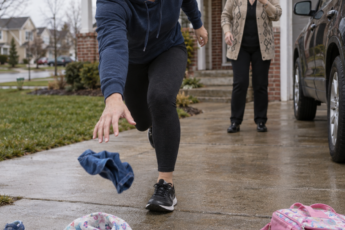
Those were the first words Mariana Aguilar heard when she returned to her parents’ house after a fourteen-hour shift in the neonatal intensive care unit. Soaked from the rain, she found her suitcase and several trash bags filled with all her belongings sitting by the front door.
Inside the kitchen waited her mother, Teresa, her father, Rodolfo, her brother Diego, and his new girlfriend, Brenda.
“What is this supposed to mean?” Mariana asked.
“It’s time you moved out,” Diego replied.
Mariana worked as a nurse at a public hospital in Guadalajara. She helped pay the household bills while saving every spare dollar to finance her medical specialization.
“That was my room.”
“Was,” her mother answered. “Now Brenda lives there.”
Then Diego casually placed Mariana’s debit card on the table.
“I found it in your jacket.”
Mariana immediately opened her banking app.
Her account was nearly empty.
Years of savings had vanished through withdrawals and purchases she had never approved.
“That money was for my education.”
Diego simply shrugged.
Without another word, Mariana gathered her belongings and walked into the pouring rain. She stopped in the parking lot of a 24-hour pharmacy.
A few minutes later, her phone rang.
It was the bank.
“Ms. Aguilar, are you somewhere safe to talk?”
At that moment, Mariana realized this was far more than a family argument.
PART 2
The bank representative, Patricia Luján, explained that several transactions had already been flagged as suspicious. Mariana told her that her brother had taken her card without permission.
The next morning she met with the trust fund’s attorney, Tomás Serrano, who reminded her that the money came from an education fund created years earlier by her late aunt, Elisa.
That night, Mariana’s supervisor, Lucía, offered her a place to stay.
Together, Patricia and Tomás reviewed the account activity.

Cash withdrawals.
Online purchases.
A furniture deposit made in Brenda’s name.
An attempted transfer into an account linked to Diego.
Then Mariana remembered the security camera in the living room.
The footage clearly showed Diego taking her card from her jacket and discussing how to spend her money with their parents before she came home.
It hadn’t been a misunderstanding.
It had been planned.
The video was immediately turned over to the bank’s legal team and the authorities. Mariana filed a police report, and every message her family later sent was added to the case.
The following morning, detectives officially opened the investigation.
PART 3
The evidence was overwhelming.
Bank records.
Text messages.
Security footage.
During the court hearing, Diego admitted he had used Mariana’s card without permission.
Their parents claimed she had been living rent-free, but they couldn’t produce a lease, rent receipts, or any written authorization allowing them to use her account.
The court ordered Diego to repay every dollar he had taken and ruled that Mariana’s parents were also financially responsible for their role.
Eventually, the family home had to be sold to cover the legal judgment.
Mariana rented a small apartment near the hospital and finally resumed her studies.
Months later, Tomás gave her a letter her Aunt Elisa had written before she passed away, reminding Mariana that she deserved to build the future she had always dreamed of.
Two years later, Mariana graduated with honors and accepted a position at a children’s hospital in Monterrey.
Years afterward, Diego sent her a message asking for help.
She read it quietly.
Then blocked his number.
Not because she hated him.
But because she had learned that forgiveness doesn’t mean giving people another chance to hurt you.
The rainy night she walked away with nothing but a suitcase felt like the end of her life.
In reality, it was the day her new life finally began.