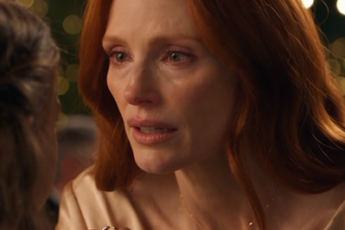
I thought my wedding day was supposed to be the beginning of a beautiful new life.
Instead, by the end of that day, I was standing inside a motorcycle workshop in a wedding dress, staring at the man I had just married and wondering how badly I had misunderstood him.
The white gown that had looked perfect that morning was now marked with grease along the hem. Around me were workbenches, metal parts, tools, and motorcycles waiting to be repaired. The air smelled of oil and machinery.
And in the middle of it all was my husband, James.
His sleeves were rolled up. His hands were dirty. He was focused on an old motorcycle as if nothing else in the world mattered.
I felt a wave of embarrassment.
Only hours earlier, people had been congratulating me. Everyone had admired my dress, the ceremony, and the life they assumed I was about to begin.
Now I couldn’t stop thinking about one question:
How had I ended up here?
James noticed my expression and slowly stood.
“Emily, please let me explain.”
“Explain what?” I asked.
He looked at me for a moment.
“I haven’t lied to you.”
“That may be true,” I replied, “but you certainly never told me the whole story.”
My friend Anna, who had followed me inside, quietly suggested that we talk somewhere private.
I ignored her.
I was too hurt and too angry.
“I thought I was marrying someone who had a clear future,” I said. “I never imagined my wedding day would end like this.”
James didn’t defend himself.
That somehow made everything worse.
He simply looked at me with an expression I couldn’t understand.
I glanced at the ring on my finger.
Then I made a decision I would regret almost immediately.
I removed both rings and dropped them onto the concrete floor.
One of them bounced across the workshop before coming to rest near James’s boots.
The room went quiet.
James looked down at it.
I expected anger.
I expected an argument.
Instead, he simply lowered his gaze.
Then the sound of footsteps came from the entrance.
A woman in a polished business suit walked into the workshop carrying a tablet and a folder. She clearly didn’t belong among the tools and motorcycles.
She approached James.
“Mr. Cross, everything has been finalized. The acquisition is complete.”
I frowned.
“What acquisition?”
The woman looked at me, then back at James.
“The company transfer. The entire service network is now officially under his ownership. The expansion plans have also been approved.”
I stared at her.
James didn’t say anything.
The woman continued speaking about new locations and future plans, but I barely heard her.
I was trying to understand what I was seeing.
This wasn’t simply a mechanic working in a small garage.
James owned the business.
And apparently, it was far larger than I had ever imagined.

The workshop where he spent his days was only one part of a rapidly growing automotive company.
My anger disappeared almost instantly, replaced by confusion and shame.
I turned toward him.
“Why didn’t you tell me?”
James gave me a quiet look.
“You never asked.”
Four simple words.
They hit harder than any argument could have.
Suddenly, memories I had dismissed began coming back.
The expensive watch he rarely wore.
The private business calls.
The meetings he never discussed.
The weekends when he disappeared for work.
The old workshop he refused to abandon even after the company began growing.
I had interpreted everything differently.
I thought he was struggling.
I thought he was ashamed of his circumstances.
I had judged him by his clothes, his workplace, and his dirty hands.
I had never stopped to ask who he really was.
“James, I’m sorry,” I whispered.
He nodded.
“I know.”
“I was angry.”
“I know.”
“I was embarrassed.”
He looked away.
“And that,” he said quietly, “was what hurt.”
I wanted to move closer, but he raised a hand.
“Don’t.”
My eyes fell on the ring still lying on the floor.
James walked over and picked it up.
“You said you didn’t want this life.”
“I didn’t mean it.”
He looked at me.
“Maybe you didn’t. But you said it.”
For a moment, I thought everything was over.
Then he turned toward an old motorcycle parked beside the workbench.
His expression softened.
“My father taught me everything I know here.”
I listened.
“When he died, this place was all I had left that reminded me of him. I started fixing motorcycles because I needed a way forward. One customer became several. Eventually, we opened another location. Then another.”
He placed a hand on the motorcycle’s worn tank.
“But I never stopped coming back here.”
“Why?” I asked.
“Because success changed my circumstances. It didn’t change where I came from.”
That was the moment I finally understood.
The workshop wasn’t something he was ashamed of.
It was part of his history.
It represented his father, his hard work, and everything he had built with his own hands.
I had mistaken humility for failure.
James reached into his pocket and took out a small box.
My heart skipped.
Inside was a simple ring.
It wasn’t extravagant. It wasn’t designed to impress anyone.
It was understated and beautiful.
“I bought this before our wedding,” he said.
I stared at it.
“I planned to give it to you after the ceremony.”
He closed the box.
“But today made me realize something.”
“What?”
“Love isn’t tested when someone has everything. It’s tested when you believe they have nothing.”
Tears filled my eyes.
“I love you.”
He didn’t answer immediately.
“I really do.”
He walked over, picked up my wedding ring, and placed it in my palm.
“If that’s true,” he said, “then don’t prove it with words.”
I looked at him.
“How?”
“Come back tomorrow.”
I didn’t understand.
Then he glanced at my ruined wedding dress.
“But don’t come back dressed for a wedding.”
A faint smile appeared on his face.
“Come dressed for work.”
For the first time that day, I smiled.
The following morning, I returned.
There was no expensive dress.
No jewelry.
No attempt to look impressive.
Just jeans, a plain shirt, and comfortable shoes.
James was already waiting.
He handed me a pair of work gloves.
“Ready?”
I nodded.
“Yes.”
That morning changed everything.
I learned that the workshop I had once considered embarrassing was actually the place where James felt most connected to his family.
I learned how much patience his work required.
And, more importantly, I learned that building a life with someone wasn’t about standing beside their success.
It was about being willing to stand beside them while they worked for it.
Months later, James came home with news about another major expansion.
This time, however, the business wasn’t the part that surprised me.
He handed me a folder.
Inside were plans for a foundation established in his father’s memory.
Its goal was to help young people who couldn’t afford traditional education by giving them access to scholarships and practical mechanical training.
Then he looked at me.
“I want you to lead it.”
I couldn’t believe what I was hearing.
“You trust me with this?”
He smiled.
“I trust the woman who came back.”
I hugged him.
“I almost lost you.”
He gently pulled back and looked at me.
“You did.”
I stared at him.
He smiled.
“You lost the man you thought you wanted.”
Then he touched my hand.
“But you finally chose the man who was actually standing in front of you.”
Years later, when people asked me about my marriage, I stopped telling them that my husband was wealthy.
That wasn’t the important part.
I tell them that I once mistook dirty hands for a lack of success.
I tell them I judged a man by what I could see instead of taking the time to understand what I couldn’t.
James’s greatest secret wasn’t the size of his company.
It was the fact that he never needed his success to prove his worth.
And I learned the lesson far too late:
Sometimes the person who appears to have the least may simply value things that cannot be measured by money.
Sometimes the greatest wealth is hidden in character, loyalty, family, and the willingness to build something meaningful with another person.
And sometimes, before deciding what someone is worth, you need to look beyond the surface.