I had spent most of my adult life believing I was good at noticing details.
Apparently, I wasn’t.
My name is Adrian Whitmore. At thirty-eight, I managed a large construction company outside Boston, where my days were filled with contracts, budgets, deadlines, and numbers large enough to make ordinary expenses seem insignificant.
Then, on an ordinary rainy morning, I overheard a conversation about twenty-eight dollars.
And suddenly, money looked very different to me.
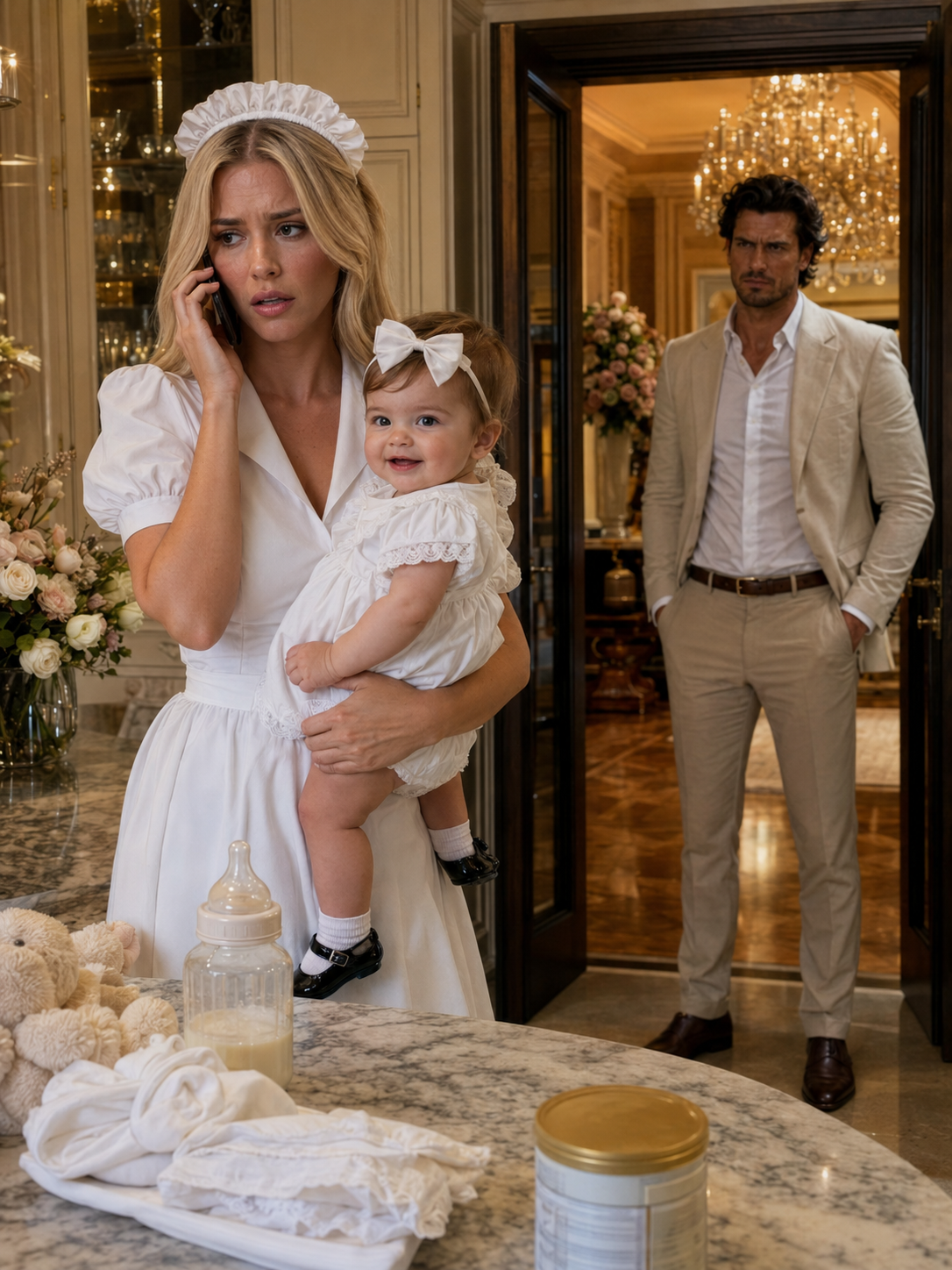
I was heading toward the kitchen when I heard Marissa Keane speaking quietly on her phone.
She had worked in my home for seven months.
Marissa was dependable to the point that I barely noticed how much I relied on her. She arrived on time, completed everything without complaint, and never brought her personal problems into work.
That morning, however, something in her voice made me stop before entering the room.
“Mom, I hate asking you this, but could you help me with twenty-eight dollars?”
There was a pause.
Marissa lowered her voice.
“It’s for Owen. I’m almost out of formula, and payday isn’t until the end of the week.”
Another silence.
“No. Please don’t do that. You need your grocery money.”
Her voice trembled slightly.
“I’ll manage somehow.”
I quietly stepped away.
Marissa never knew I had heard her.
For the rest of the morning, I couldn’t concentrate.
Twenty-eight dollars.
At work, I regularly approved expenses larger than what some families earned in a year. Yet a woman who worked under my roof was trying to figure out how to cover her baby’s next few days of formula.
I went into my office and began doing something embarrassingly simple.
I calculated.
Housing.
Transportation.
Utilities.
Childcare.
Food.
Diapers.
Formula.
Then I compared those expenses with what Marissa earned.
The answer bothered me.
Her budget technically worked—as long as absolutely nothing went wrong.
A doctor’s visit, a repair, an unexpected bill, even a few missed work hours could upset everything.
I leaned back in my chair.
I had never asked.
Worse, I had never noticed.
I didn’t want to embarrass Marissa by handing her money after overhearing a private conversation. So I decided to find another way to help.
First, I reviewed the household payroll and employment records.
That was when a name on her file stopped me.
Nathan Keane.
Listed as deceased spouse.
I stared at it.
I had heard that name before.
And the memory returned immediately.
Four years earlier, I had entered my grandfather’s study without knocking.
My father was inside with Raymond Pierce, the attorney who had represented our family for decades.
They were arguing.
I almost backed out until I heard Raymond say a name.
Nathan Keane.
“There was an agreement,” Raymond had insisted. “You know what your father intended.”
My father’s expression had turned cold.
“Whatever he intended died with him.”
“That isn’t your decision.”
My father struck his palm against the desk.
“Nathan Keane will receive nothing connected to this family.”
Then they noticed me.
The conversation ended instantly.
I asked my father about it later.
He dismissed the subject.
“Old business. It doesn’t concern you.”
Whenever I mentioned Nathan’s name afterward, I received essentially the same answer.
Leave it alone.
Eventually, I did.
Until Marissa Keane walked into my life without my realizing who her husband had been.
That evening, Marissa left work at her usual time.
I waited several minutes before leaving.
I told myself I wasn’t following her because of Nathan.
Not entirely.
I had already bought several bags of groceries, baby supplies, and formula. I also carried an envelope with enough money to take some pressure off her immediate expenses.
My plan was simple.
Leave everything outside her apartment.
No awkward conversation.
No explanation about what I had overheard.
No reason for her to feel that accepting help made her indebted to me.
Marissa lived in a modest apartment building about half an hour away.
I parked across the street and waited until she entered.
I was reaching for the grocery bags when another vehicle pulled up.
A black sedan.
A man stepped out.
Even from a distance, I recognized him.
Raymond Pierce.
My family’s attorney.
I remained in my car.
Raymond walked directly to Marissa’s building.
That was enough to tell me his arrival wasn’t a coincidence.
I got out and crossed the street, stopping where I could see the entrance to Marissa’s ground-floor apartment.
She opened the door.
The moment she recognized Raymond, her expression changed.
“What are you doing here?”
“I came because the waiting period is over,” he said.
Marissa looked past him nervously.
“You promised me more time.”
“I gave you as much as I could.”
Then Raymond said something that made me forget about the grocery bags in my hands.
“Nathan left instructions.”
Marissa stood motionless.
Finally, she stepped aside.
I moved closer to the building.
Through the partially visible doorway, I saw Marissa open a drawer.
She removed an old blue envelope.
I knew the symbol embossed on it immediately.
The Whitmore crest.
My family’s crest.
Raymond accepted the envelope and carefully opened it.
Whatever he read inside changed his expression.
Marissa covered her mouth.
“Nathan never wanted anything from the Whitmores,” she said.
Raymond looked at her.
“This wasn’t a gift from them.”
Marissa wiped her eyes.
“Then what was it?”
Raymond’s answer came quietly.
“Something that was already his.”
I couldn’t remain outside anymore.
I stepped toward the doorway.
Raymond saw me first.
His entire body went still.
Marissa turned.
Her face lost its color.
“Mr. Whitmore?”
I looked at Raymond.
“What exactly belonged to Nathan?”
Neither of them answered.
I entered the apartment and placed the groceries near the door.
My original reason for being there suddenly seemed very far away.
“Four years ago,” I said, “I heard my father arguing with you about Nathan Keane. He told you Nathan would never receive anything from our family.”
Raymond slowly removed his glasses.
“You weren’t supposed to hear that conversation.”
“But I did.”
I looked at Marissa.
“And nobody thought it was worth mentioning that the Nathan Keane you were discussing was her husband?”
Marissa stared at Raymond.
“You knew he worked for Mr. Whitmore’s family?”
Raymond hesitated.
“It was more complicated than that.”
I pointed toward the envelope.
“Then make it uncomplicated.”
Raymond said nothing.
So I reached for the document.
“Adrian,” he warned.
I looked at him.
“If this concerns my family and Marissa’s husband, I’m done being told to stay out of it.”
He reluctantly let go.
The document was old.
My grandfather’s signature appeared at the bottom.
I recognized it instantly.
Several legal paragraphs filled the page, but one section caught my attention.
Nathan Keane.
I continued reading.
At first, I assumed the document concerned money or some old business arrangement.
Then I reached a line identifying Nathan’s parentage.
I stopped.
Read it again.
Then a third time.
My hands began to shake.
“This can’t be right.”
Marissa stepped closer.
“What does it say?”
I looked at Raymond.
He had spent decades advising my family.
Now he couldn’t meet my eyes.
“Tell me this document is wrong.”
He remained silent.
That silence answered me.
Marissa took the page from my hands.
She read the same line.
Her expression changed from confusion to disbelief.
“Nathan never told me this.”
“He may not have known the whole truth,” Raymond said.
I felt as though the room had shifted beneath me.
For years, my father had spoken about Nathan as if he were an outsider trying to claim something from the Whitmores.
But according to my grandfather’s signed document, Nathan hadn’t been asking my family for charity.
He hadn’t been trying to take something that belonged to us.
Because the man identified as Nathan’s biological father was a Whitmore.
A member of my own family.
I thought about my father’s anger four years earlier.
His insistence that Nathan receive nothing.
The abrupt silence whenever I entered the room.
Suddenly, it no longer sounded like a disagreement over money.
It sounded like someone trying to keep a family secret buried.
I turned toward Raymond.
“How long have you known?”
He looked exhausted.
“Longer than I wanted to.”
“And my father?”
Raymond didn’t answer immediately.
That hesitation frightened me more than any explanation could have.
Marissa held the document against her chest.
“My husband died without telling me any of this.”
Raymond looked at her gently.
“Nathan was trying to protect you and Owen from a conflict that began long before either of you became involved.”
I looked toward the small collection of baby bottles drying beside the kitchen sink.
Twenty-eight dollars.
That was why I had followed Marissa home.
I had come believing I was about to quietly help an employee struggling to buy formula for her child.
Instead, I was standing inside her apartment holding proof that her late husband had been connected to my family all along.
And if Nathan truly had a legitimate claim to something my grandfather had set aside for him, then Owen might have one too.
I turned back to Raymond.
“What did my grandfather leave Nathan?”
Raymond looked at the blue envelope.
Then at Marissa.
Finally, he looked at me.
“Before I answer that,” he said, “there’s something else you need to know.”
My chest tightened.
“What?”
Raymond took another document from the envelope.
“Your father didn’t spend four years trying to hide who Nathan was.”
He placed the second page on the table.
“He was trying to hide what Nathan owned.”
And when I saw the figure written beneath my grandfather’s signature, I finally understood why Nathan Keane’s name had been forbidden in my family.