My name is Adrian Whitmore.
At thirty-eight, I ran one of the largest construction groups in the Boston area. My mornings usually began with meetings about contracts, investments, property deals, and sums of money so large that twenty-eight dollars should have meant absolutely nothing to me.
And yet, on one rainy Tuesday, twenty-eight dollars changed the way I saw my employees, my father, and eventually my entire family.
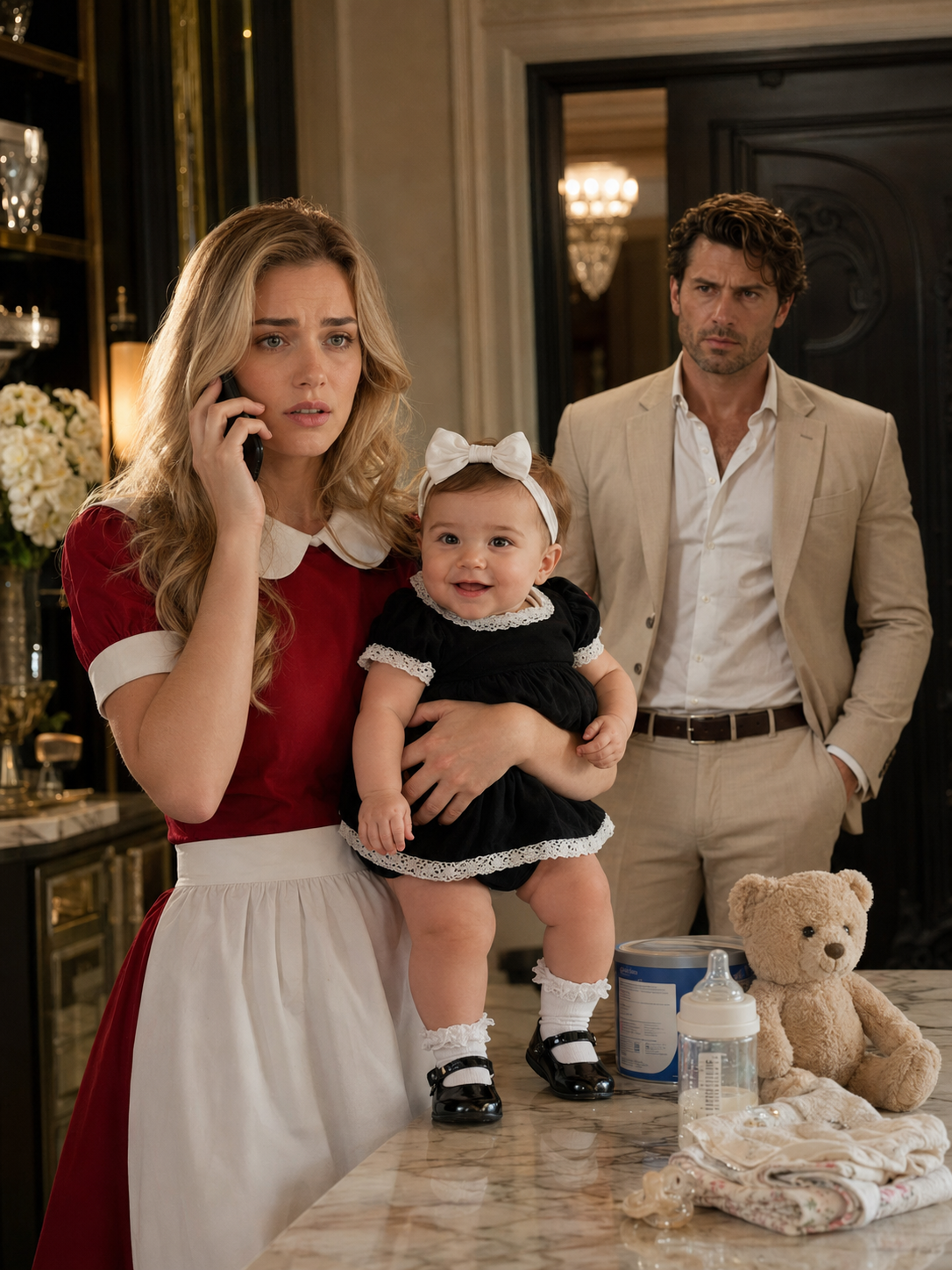
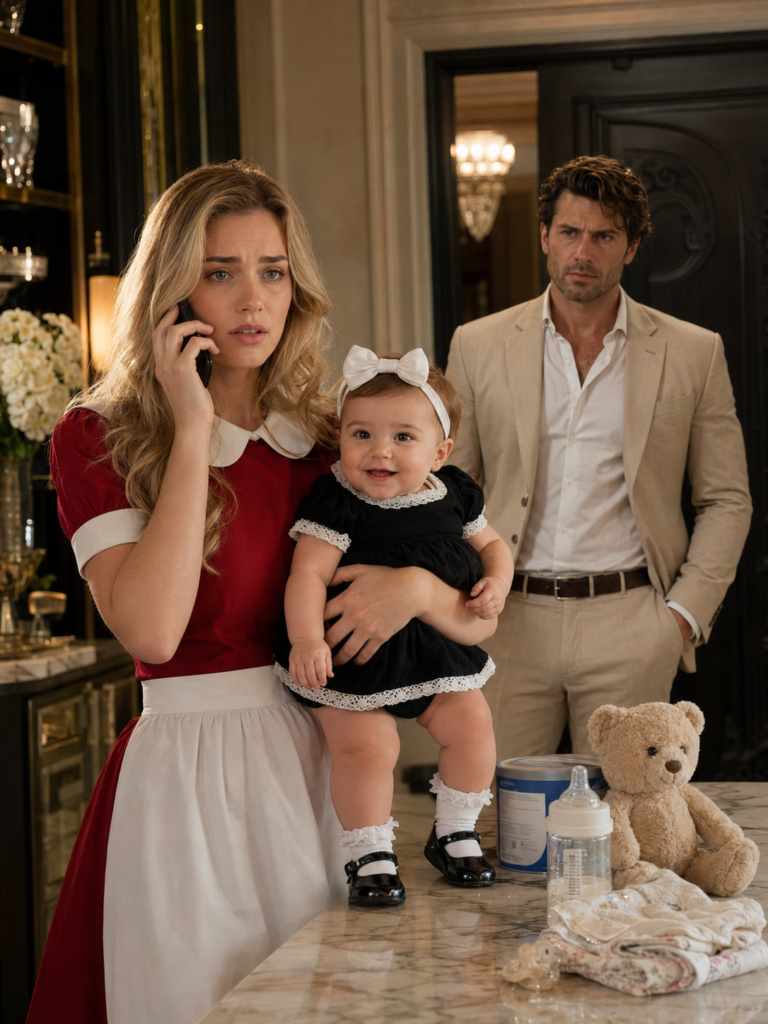
I was passing the kitchen when I heard Marissa Keane speaking quietly on the phone.
I wasn’t trying to listen.
But her voice was so low that I slowed down without realizing it.
“Mom… could you lend me twenty-eight dollars?”
I stopped.
There was a pause.
“Owen’s almost out of formula. I thought I could make it until payday.”
Another silence.
Then she added quickly:
“No, don’t use your grocery money. I’ll figure something out.”
I walked away before she saw me.
Marissa had worked in my house for seven months.
She was always punctual.
Always discreet.
Never complained.
Never asked for an advance.
All I really knew was that she was a widow raising a little boy on her own.
That morning, I sat in my office and looked at her salary differently for the first time.
Rent.
Transportation.
Diapers.
Formula.
Utilities.
Childcare.
One unexpected expense could destroy an entire month’s budget.
And until that moment, I had never really thought about it.
I asked to see her employment records.
My first intention was simple. I wanted to understand whether I could improve her situation without embarrassing her. Maybe I needed to review compensation for the entire household staff.
Then I saw the name of her late husband.
Nathan Keane.
My entire body went still.
I knew that name.
Four years earlier, I had walked into my grandfather’s office at the wrong moment.
My father was arguing with Raymond Pierce, the longtime attorney for the Whitmore family.
Before they noticed me, I heard Raymond say:
“Something was promised to Nathan.”
My father had answered coldly:
“Nathan Keane will get nothing from this family.”
The moment they saw me, the conversation ended.
Later, they told me it was an old professional dispute.
I didn’t ask questions.
I should have.
That evening after work, I drove to Marissa’s neighborhood.
I had bought baby formula, groceries, and a few things for Owen.
I had also put some cash in an envelope.
My plan was to leave everything outside her apartment and disappear before she saw me.
Looking back, I understand that even that kind of help could have felt intrusive.
But at the time, I only wanted to give her a little breathing room.
Marissa lived in a modest apartment building.
I was still sitting in my car when a black sedan pulled up.
Raymond Pierce stepped out.
I straightened immediately.
Raymond never visited anyone without a reason.
Marissa opened the door.
Even from where I sat, I could see her expression change.
“You shouldn’t be here,” she said.
Raymond answered calmly.
“Nathan left instructions.”
They went inside.
Several minutes later, through the window, I saw Marissa open an old drawer.
She removed a blue envelope.
I recognized it immediately.
The Whitmore family seal was printed across the front.
Raymond opened it.
Marissa covered her mouth with one hand.
“Nathan never wanted their money,” she whispered.
Raymond shook his head.
“It wasn’t their money.”
She stared at him.
“Then whose was it?”
“Nathan’s.”
My stomach tightened.
At that exact moment, Raymond looked toward the window.
He saw me.
He froze.
Marissa followed his gaze.
“Mr. Whitmore?”
There was no reason to stay outside anymore.
I went in.
The apartment was small.
A stroller stood beside the sofa.
The blue envelope and several documents were spread across the table.
I looked at Raymond.
“What exactly belonged to Nathan?”
Neither of them answered.
I picked up the first document.
My grandfather’s signature was at the bottom.
Then I saw Nathan’s full name.
And finally, the line identifying his father.
Charles Whitmore.
My grandfather.
I read it twice.
Then a third time.
“Nathan was my uncle?”
Marissa closed her eyes.
Raymond nodded.
“Yes.”
I sat down.
The room suddenly felt much smaller.
“How is that possible?”
Raymond gathered the other papers.
“Your grandfather had a relationship before his marriage. Nathan was born from that relationship. The family knew about him, but for decades his existence was almost never discussed.”
“Why?”
Raymond gave me a tired, sad smile.
“Powerful families sometimes have very strange ways of dealing with things they find inconvenient.”
Marissa glanced at Owen’s stroller.
“Nathan barely told me anything until the final years of his life.”
I pointed toward the documents.
“And these?”
Raymond slid one of them toward me.
It wasn’t charity.
It wasn’t a gift.
It was an ownership stake in the original family company.
My grandfather had formally designated that stake for Nathan.
Not enough to give him control.
But enough to completely change his financial future.
And now Marissa’s.
And Owen’s.
“Did my father know?”
Raymond hesitated.
That hesitation answered the question before he did.
“Yes.”
“And he never honored the agreement?”
“He claimed your grandfather had changed his mind.”
“Did he?”
Raymond slowly shook his head.
“Not according to the documents I’ve seen.”
Anger rose in me.
But I didn’t want shouting.
I wanted facts.
“Did Nathan eventually learn about all of this?”
Marissa nodded.
“Four years ago.”
Suddenly, everything connected.
The argument I had overheard.
My father’s reaction to Nathan’s name.
The silence.
“Did Nathan confront my father?”
“Yes.”
Marissa’s voice became quieter.
“But he wasn’t trying to destroy your family. He just wanted someone to acknowledge what had happened.”
“And the money?”
“That wasn’t what mattered most to him.”
Raymond nodded.
“Nathan mainly wanted to stop being treated like something the family needed to hide.”
I looked between them.
“What happened after he confronted my father?”
Marissa lowered her eyes.
“He came home extremely upset. He said maybe we should leave Boston and start over somewhere else.”
“Why?”
“He wouldn’t tell me.”
Raymond spoke carefully.
“Three days later, Nathan died in a car accident.”
Silence filled the apartment.
I already knew he had died in an accident.
But now the fact carried a different weight.
“Do you think my family had something to do with his death?”
Raymond raised his hand immediately.
“No.”
His voice was firm.
“I am not saying that, Adrian. And you shouldn’t make that accusation without evidence either. Nathan’s death was officially ruled an accident. There were things that bothered me at the time, but concern is not proof.”
I took a slow breath.
He was right.
Facts.
Not accusations.
Marissa looked toward her son.
“I don’t want Owen becoming the center of some Whitmore family war.”
I followed her gaze.
“Owen is Nathan’s son.”
“Yes.”
“That makes him my cousin.”
For the first time, Marissa looked at me differently.
Not as her employer.
Not even as a Whitmore.
But as someone who had finally said the one word that mattered.
Family.
Raymond opened another folder.
“Nathan left very specific instructions. If something happened to him before this was resolved, Marissa was never supposed to face the family alone.”
I looked at Raymond.
“Then why did you wait four years?”
“Because Nathan asked me to wait until there was someone in the Whitmore family capable of listening before asking how much the problem would cost.”
I was silent.
“And you decided that person was me?”
Raymond almost smiled.
“I didn’t decide anything. I came here to speak to Marissa. You invited yourself.”
Marissa crossed her arms.
“That reminds me. Why were you following me?”
I looked toward the grocery bags sitting near the door.
“I heard your phone call this morning.”
Her face flushed.
“Oh.”
“I wanted to help without embarrassing you.”
She looked at the bags.
“So you followed me home.”
I sighed.
“When you say it like that, I admit the plan sounds terrible.”
To my surprise, she smiled.
Only for a moment.
Then she became serious again.
“I’m not taking the money.”
“Fine.”
“And I don’t want you raising my salary just because you know who my husband was.”
“I won’t.”
She frowned.
“Then what are you going to do?”
I thought for a moment before answering.
“First, I’m going to review working conditions for everyone on my staff. If someone working full-time for me has to choose between groceries and formula for their child, then this problem is bigger than one employee.”
Raymond nodded.
“That’s a better place to start.”
I continued.
“Second, these documents will be reviewed independently. Not by anyone who works for my father. Not by anyone who depends on me.”
Marissa stayed quiet.
“Third, nothing concerning Owen’s future will be decided unless you have your own legal representation.”
“I can’t afford that.”
Raymond stepped in.
“We can arrange independent counsel without creating any obligation to the Whitmore family.”
Marissa looked at Owen.
“Nathan would have hated all of this.”
“Why?”
“Because he would have thought you were trying to rescue us.”
I shook my head.
“Then nobody will rescue you. You’ll simply be given the chance to choose for yourselves.”
Three days later, my father walked into my office.
I placed a copy of the agreement in front of him.
He didn’t yell.
He didn’t deny anything.
He just stared at the page.
“Where did you get this?”
I looked at him.
“That’s really your first question?”
“Adrian…”
“Nathan Keane was your brother.”
My father sat down.
For the first time in my life, he looked old.
“He was my father’s son.”
“Which made him your brother.”
He said nothing.
“Why did you never tell me about him?”
“Because my father wanted the matter kept private.”
“Grandfather has been dead for years.”
“Some things don’t disappear just because someone dies.”
“No. Some things continue because nobody has the courage to talk about them.”
He stared at me.
“You don’t know the whole story.”
“Then tell me.”
That time, he did.
Nathan had grown up far away from the Whitmores.
My grandfather had occasionally helped Nathan’s mother financially, but always in secret.
As he got older, he apparently began to feel guilty about how Nathan had been treated.
He tried to correct part of that injustice by assigning Nathan a stake in the family business.
My father had always viewed that decision as a betrayal of the “official” family.
After my grandfather’s death, he challenged the arrangement.
For years, Nathan himself didn’t even know it existed.
Then someone sent him a copy.
“When Nathan contacted you,” I asked, “why wouldn’t you listen to him?”
My father clenched his jaw.
“I thought he wanted money.”
“And when you realized he mostly wanted recognition?”
He didn’t answer.
“Did you ever call him your brother?”
Silence.
That silence told me everything.
“And the accident?”
My father looked up sharply.
“I had nothing to do with his death.”
I studied him.
“Can I believe you?”
He looked hurt.
“I’m your father.”
“That wasn’t my question.”
After a long silence, he finally said:
“Investigate anything you want.”
So I did.
I hired people completely outside our family circle.
The documents were independently examined.
The old circumstances surrounding Nathan’s death were also reviewed as far as reasonably and legally possible, without public speculation or reckless accusations.
Nothing directly connected my father to the accident.
That part remained what it had officially always been.
A tragedy.
But the financial agreement was different.
My grandfather’s documents were genuine.
The ownership stake meant for Nathan had never been properly transferred.
After months of legal work and negotiations, a settlement was reached in favor of Nathan’s estate.
Marissa did not suddenly become incredibly wealthy.
She didn’t want that anyway.
Part of the settlement was structured to provide long-term stability for Owen.
The rest was professionally managed.
Several months later, Marissa walked into my office holding a letter.
“I’m resigning.”
I smiled.
“I had a feeling this day was coming.”
“I’m not leaving because I was unhappy here.”
“I know.”
“I want to go back to school.”
That surprised me.
“For what?”
“Project management. Nathan always said I was better than he was at organizing things.”
“He was probably right.”
She smiled.
“You didn’t know him.”
I looked toward a photograph of Nathan sitting on my desk.
“I’m trying to now.”
Before leaving, she turned back.
“Adrian?”
It was the first time she had ever called me by my first name.
“Yes?”
“Thank you for not turning Owen into some kind of Whitmore project.”
I looked toward the little boy in his stroller.
“He’s a Keane.”
Marissa smiled.
“And a Whitmore.”
I never forgot that sentence.
A year later, I organized a dinner.
No press.
No announcement.
No photographers.
Only a few people.
Marissa.
Owen.
Raymond.
My parents.
Me.
And one empty chair.
When my father saw it, he stopped.
“Who is that for?”
I placed an old photograph on the table.
Nathan looked to be in his early thirties, smiling in front of a construction site.
“For him.”
My father stayed silent.
Then he sat down.
He barely spoke throughout dinner.
Owen, however, ran around the table with the endless energy of a child who had no idea how much history surrounded him.
At one point, he stopped in front of my father.
He held out a small toy truck.
My father accepted it.
“Thank you.”
Owen smiled and ran away.
Nobody said anything.
It wasn’t forgiveness.
Not yet.
Maybe some things can never be completely forgiven.
But for the first time in decades, a Whitmore was simply accepting that Nathan had existed.
A few weeks later, my father asked me to come to his office.
Nathan’s photograph was sitting on his desk.
The same one from the dinner.
“I want to put this in the company archives,” he said.
“The private archives?”
He shook his head.
“The historical gallery.”
I stared at him.
“Are you sure?”
“Not really.”
He gave me a tired smile.
“That’s probably why I need to do it.”
Under the photograph, we added no dramatic statement.
Only three lines.
Nathan Keane
Son of Charles Whitmore
Member of our family and part of our history.
Marissa came to see the photograph several days later.
She stood in front of it for a long time with Owen in her arms.
“Nathan would have laughed,” she said.
“Why?”
“He always said he never wanted to see his name hanging on a Whitmore wall.”
I smiled.
“So he’d probably tell us to take it down.”
“Immediately.”
We both laughed softly.
And in that moment, I understood something.
This story had never really begun with a corporation.
Or an inheritance.
Or a powerful family name.
For me, it had begun with twenty-eight dollars.
A young mother who hated asking for help.
A baby who was nearly out of formula.
And a wealthy man discovering how easy it was to ignore the struggles of people standing right in front of him.
Nathan had spent years searching for something our family could have given him for free.
Not a fortune.
Not control of a company.
Just one sentence.
You belong to this family too.
We had not been brave enough to tell him while he was alive.
But we could stop erasing his name.
And we could make sure Owen never grew up believing that his own history was something he needed to hide.
For years, I believed protecting the Whitmore name meant defending what our family had built.
Nathan taught me something else.
Sometimes protecting a family means having the courage to admit what it did wrong.
And then choosing to do better for the next generation.