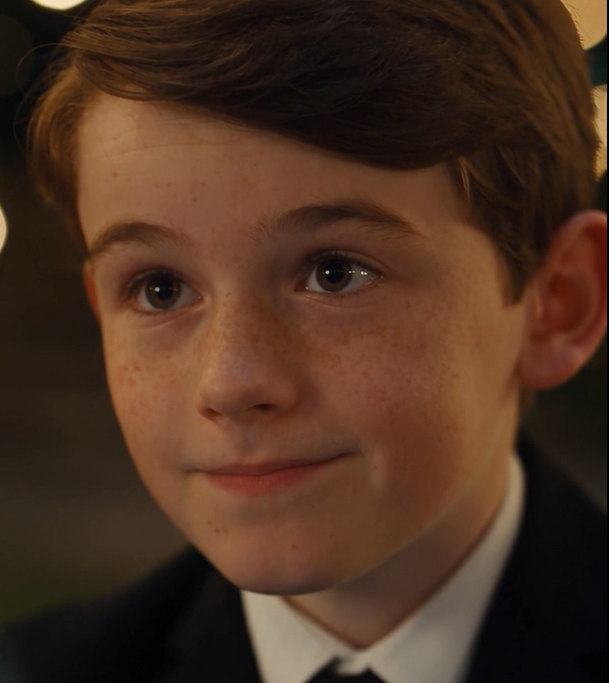
The reception garden sparkled under strings of warm lights, and the music drifted softly across the lawn. Adults gathered around candlelit tables while children raced between the flowerbeds, their laughter mixing with the rhythm from the dance floor.
At one of the quieter tables sat eight-year-old Mara.
She wore a lavender party dress and a small silver clip in her dark hair. Her wheelchair was decorated with a ribbon her aunt had tied around the handle earlier that evening. Mara looked lovely, but she wasn’t watching the lights or the dessert table.
Her eyes stayed on the dancers.
Her father, Adam, noticed.
He had learned to recognize the look on her face: not sadness exactly, and not jealousy. It was the careful expression of a child who had stopped expecting to be included unless someone remembered to ask.
Adam sat beside her.
“Are you having a good time?” he asked gently.
Mara nodded, but her attention did not leave the dance floor.
“It looks fun,” she said.
Before Adam could reply, a boy in a navy-blue suit approached their table. He was about Mara’s age, with slightly untidy hair and the serious expression of someone gathering courage.
“Hello,” he said.
Mara looked up. “Hi.”
“My name is Theo.”
“I’m Mara.”
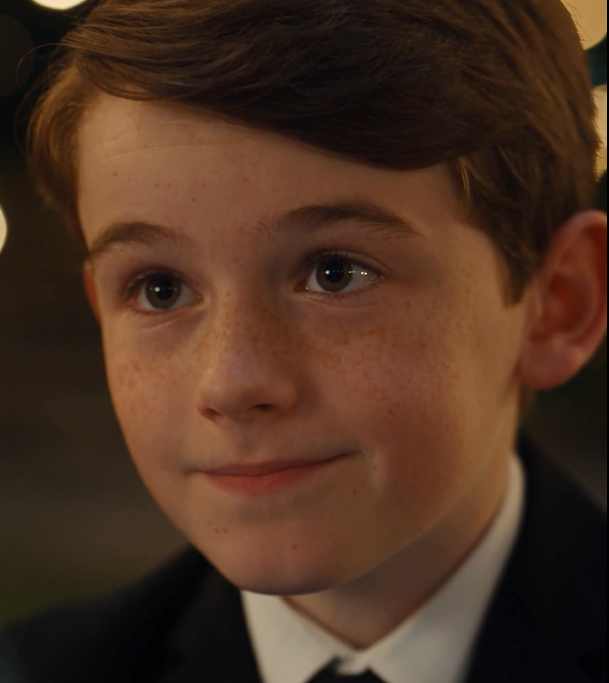
Theo glanced toward the music, then back at her.
“Would you like to dance?”
Mara went quiet.
For a second, Adam thought she might smile. Instead, she lowered her eyes toward the wheels of her chair.
“I don’t think I can,” she said.
Theo seemed puzzled.
“Why not?”
Adam leaned forward, careful not to speak for his daughter but wanting to help. “Mara moves differently from most of the children.”
Theo considered that answer for a moment. Then he looked at Mara again.
“I didn’t mean you had to move like them,” he said. “I just thought we could listen to the music together.”
The simplicity of it made Mara look up.
“Together?” she repeated.
Theo nodded and offered his hand.
Mara hesitated, then placed her fingers lightly in his.
Adam watched as Theo walked beside her toward the edge of the dance floor. He did not push her chair or try to take control. He simply stayed beside her, letting Mara decide where to go.
At first, she moved cautiously, turning one wheel and then the other. Theo copied the beat by shifting from foot to foot. Soon he started making silly little spins, and Mara laughed.
That laugh caught Adam off guard.
It had been a long time since he had heard it so freely.
A few nearby guests noticed the children. Some smiled, but Mara did not seem aware of them. She was focused on Theo, who was pretending to be a very clumsy ballroom dancer.
“You’re stepping on my imaginary feet,” he announced.
“I don’t see any feet,” Mara replied.
“That’s because they’re imaginary.”
She laughed again, louder this time.
When the song ended, Mara looked toward Adam.
“Dad,” she called, “will you dance too?”
For a moment, Adam could not answer.
Years before, when Mara was much smaller, she used to stand on his shoes while he shuffled around their living room. She would hold tightly to his hands and command him to go faster, even when he was already out of breath.
He had assumed those memories belonged only to the past.
But Mara remembered.
Adam stepped closer. “How would you like to dance?”
Mara thought about it.
“Can you hold my hands?”
“Of course.”
He stood in front of her, took both her hands, and began to move slowly with the music. Mara guided the chair in gentle circles while Adam matched her pace. There was no performance, no need for applause, and no expectation that the moment should look like anyone else’s dance.
It was simply theirs.
Mara’s face brightened as another song began.
“I remember our living-room dances,” she told him.
“So do I,” Adam said.
“I thought maybe we couldn’t do them anymore.”
Adam squeezed her hands softly. “We can always find a new way.”
Theo remained nearby, swaying along with exaggerated seriousness. Mara pointed at him.
“He needs dancing lessons.”
“I agree,” Adam said.
Theo gave a theatrical bow. “I’m doing my best.”
The three of them laughed.
Later, Mara returned to her table for a glass of water and a break. She was tired, but there was a new ease in her expression. Theo came over to say goodbye before leaving with his family.
“Thanks for dancing,” he said.
Mara smiled. “Thanks for asking.”
Adam watched Theo walk away, then looked at his daughter.
The evening had not changed every difficult part of her life. It had not erased the adjustments she faced each day, and no one had treated the moment as a miracle.
But one small invitation had changed the way the night felt.
Theo had not seen Mara as someone who needed to be corrected, rescued, or tested. He had simply made room for her in the celebration and trusted her to choose how she wanted to join.
Years later, Mara would remember the glowing garden, her father’s warm hands, and a boy in a navy-blue suit who had made her laugh.
Most of all, she would remember that inclusion often begins with something very ordinary:
A sincere question.
And the patience to let someone answer it for themselves.