“Please don’t come any closer to my daughter.”
Arman’s words were quiet, but the boy heard them over the orchestra.
The charity gala filled the grand ballroom with soft music, golden light, and carefully rehearsed smiles. Guests spoke about generosity while photographers moved between the tables.
Near the front of the room sat Arman’s eight-year-old daughter, Liana. Her pale pink dress rested neatly over her wheelchair, and her eyes followed the children dancing near the stage.
A few years earlier, Liana had been injured in an accident. Since then, she had faced a long and uncertain recovery. Her doctors had encouraged careful rehabilitation, but Arman’s fear of seeing her discouraged had made him overly protective.
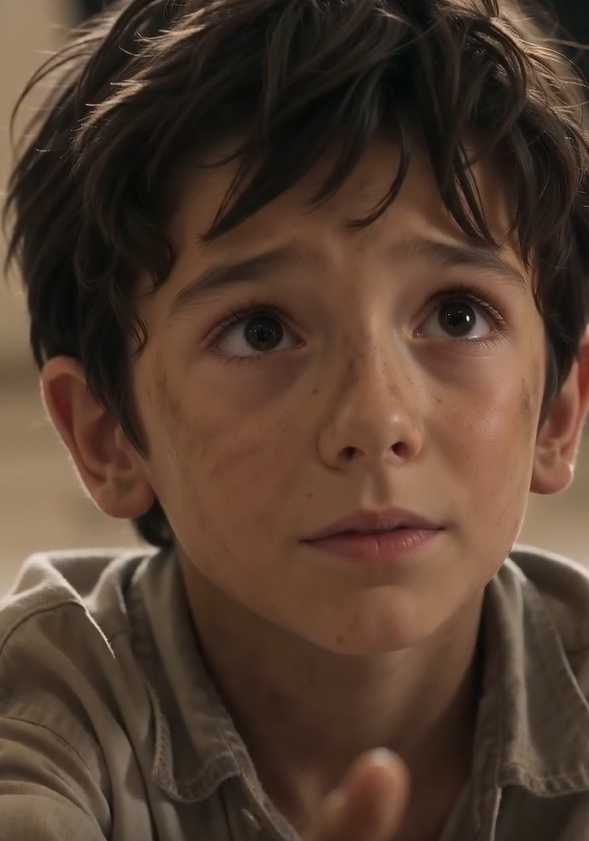
The boy standing before them looked about twelve. His clothes were worn, and his hands were marked with dust from the street outside. Yet his expression was calm.
Liana looked at her father.
“Dad, he only wants to talk.”
Arman hesitated.
The boy kept a respectful distance.
“My name is Narek,” he said. “I saw you watching the dance floor. Do you miss being able to join in?”
Liana nodded slowly.
“I’m working with my therapist,” she said. “But sometimes it feels too hard.”
Narek did not offer a miracle or pretend to understand her treatment.
“My dad used to say that difficult things get easier when you take them one small part at a time,” he replied. “Maybe one day you’ll dance again. But today, you only have to keep trying.”
His words were simple, but they reached Liana.
Arman noticed that a physical therapist, invited to speak at the gala, had been standing nearby. Liana turned to her.
“Could we practice later?” she asked. “Not here. I just want to keep working.”
The therapist smiled warmly.
“Of course. We will follow your plan and take it safely.”
For the first time that evening, Arman realized that his daughter did not need him to promise impossible outcomes. She needed him to believe in her effort.
Then Narek took an old photograph from his pocket.
“I came here for another reason too,” he said.
The photo showed two boys standing outside a small neighborhood shop. One was clearly Narek’s father as a child. The other made Arman go still.
It was Samvel—his younger brother.
Samvel had disappeared when they were teenagers, during a difficult period in their family’s life. Arman had spent years wondering what had become of him.
“Where did you get this?” he asked.
“My father kept it,” Narek explained. “He told me a boy named Samvel once gave him food and his coat on a very cold night. They stayed friends for a while.”
Arman held the photograph with unsteady hands.
“Your father knew my brother?”
Narek nodded.
“My father passed away last year. Before then, he told me that if I ever found your family, I should tell you something: Samvel always remembered you.”
Arman struggled to answer.
Narek continued.
“My father also had mobility problems. Some people assumed he could not do much because of that. But he taught me never to decide someone else’s limits for them.”
Arman looked at Liana.
He had spent years searching for specialists, equipment, and every possible solution. But he had not always listened closely enough to what his daughter wanted for herself.
He knelt beside her wheelchair.
“I’m sorry,” he said. “I was trying so hard to protect you that I forgot to ask how you wanted to move forward.”
Liana placed her hand in his.
“I want to keep trying,” she said.
Arman smiled through tears.
“Then I’ll be beside you—at your pace.”
The gala program was set aside that evening. Instead of speeches about generosity, guests listened as the therapist explained the importance of accessible rehabilitation and consistent support for children and families.
In the months that followed, Liana continued her therapy. Progress came gradually. Some days were encouraging; others were difficult. But she celebrated every achievement, whether it was balancing with support, taking a carefully assisted step, or gaining more confidence in her daily routines.
Arman changed as well.
He created a community rehabilitation fund so children could access professional therapy without their families facing impossible costs. He named it One Step, not because success happens overnight, but because every meaningful journey begins somewhere.
Narek refused the money Arman tried to give him.
“I don’t need that,” he said. “Just make sure other kids get the chance to keep going.”
Years later, Liana stood on her school stage using the mobility support that worked best for her. She spoke about patience, care, and the people who had encouraged her.
She ended with a sentence she would never forget:
“Sometimes helping someone does not mean carrying them. It means standing beside them while they find their own way forward.”