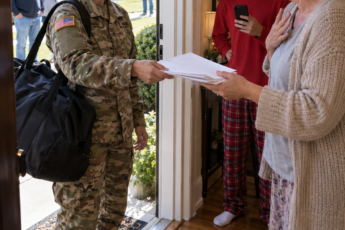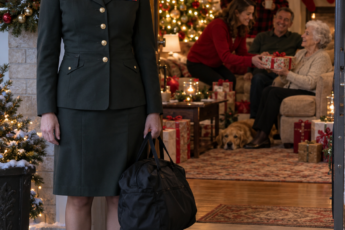
Four months into an overseas assignment, I received a message from my fifteen-year-old daughter, Emily, that changed the way I looked at my home.
It arrived late at night, when the work around me had finally quieted down.
Dad, I need to tell you something, but I am scared.
Emily usually sent simple messages while I was away. She told me about school, complained about her math homework, sent photos of Evan’s drawings, and reminded me that our dog still slept beside the front door whenever it rained.
But this message was different.
The moment I read it, I felt the room go still.
You can tell me anything, I wrote. Are you safe?
Several seconds passed.
Yes. It is about Mom.
I stared at the screen, trying not to imagine the worst.
What happened?
The reply came slowly.
Mom has been bringing different men to the house while you are gone. They stay late. Sometimes they are still there in the morning.
My hand tightened around the phone.
For a moment, I forgot where I was. I forgot the distance between us, the noise outside, and the years of routine that had made our family feel secure.
All I could see was my daughter sitting alone in her room, carrying a secret she should never have had to carry.
Another message appeared.
I am sorry I waited. I did not want to upset you while you were away.
My heart broke for her.
Emily, listen to me, I wrote. You did nothing wrong. You never need to apologize for telling me the truth.
Then came the question that hurt most.
Are you mad at me?
Never, I answered immediately. Not at you. I am proud of you for coming to me.
She explained that she usually stayed upstairs with headphones whenever Natalie had visitors. Evan, who was only ten, seemed confused but had not asked many questions. Emily had tried to keep him distracted with movies, homework, and games whenever she could.

That made me sit up straighter.
My marriage could wait.
My children could not.
If you ever feel uncomfortable, unsafe, or alone with someone you do not know, call a trusted adult right away, I told her. You do not have to protect anyone’s feelings. You and Evan come first.
She replied with a small heart.
Then she asked, Are you okay, Dad?
I looked at those words for a long time.
The truth was that I was not okay. My chest felt tight, and every memory of Natalie suddenly seemed uncertain. I remembered the encouraging messages she had sent during my assignment, the smiling photos, the calls where she told me everything was fine.
But Emily was fifteen. She was already carrying too much.
I love you, I wrote. Everything will be handled carefully. You do not need to solve this for me.
After our conversation ended, I stayed awake until morning.
I wanted to call Natalie. I wanted to demand an explanation. I wanted to ask how long she thought she could hide something like this.
But anger rarely brings clarity.
And more importantly, I refused to let Emily become trapped in the middle of a conflict between her parents.
The next morning, I contacted Marcus, a longtime friend who lived near our neighborhood. He knew Emily and Evan well and had always treated them like family.
“I need a favor,” I told him.
My voice must have sounded different, because he did not interrupt.
“I need you to make sure the kids have someone close by they can call if they need help,” I said. “No confrontation. No questions for them. Just be available.”
“Are they safe?” he asked.
“As far as I know, yes. But I do not want to take chances.”
“You have my word,” Marcus said.
For the first time since Emily’s message, I felt a small measure of relief.
Over the following days, I tried to focus on my responsibilities, but my mind kept returning home. I replayed every detail Emily had shared. I wondered how long she had been keeping this from me. I wondered how many evenings she had sat behind a closed bedroom door, pretending not to hear what was happening downstairs.
I also knew I could not treat suspicion as a final verdict.
Emily’s message mattered. Her feelings mattered. Her safety mattered.
But I needed to make decisions based on facts, not pain.
I arranged to leave earlier than planned. The official reason was personal family leave, and I shared no details with Natalie. As far as she knew, I was still weeks away from returning.
Before I traveled, I reviewed our shared household records.
At first, nothing seemed unusual. Utility payments. Groceries. School expenses. The familiar rhythm of bills that had shaped our life for years.
Then I found several transfers I did not recognize.
They were not enormous amounts, but they were frequent enough to stand out. Some were marked with vague descriptions. Others had been moved from savings into accounts I had never seen before.
I stared at the screen, trying to make sense of it.
The situation was no longer only about a broken promise between two adults.
There were questions about money, secrecy, and choices that could affect Emily and Evan’s future.
I contacted a family-law attorney recommended by Marcus. I gave her only the basic facts and asked what I should do to protect my children without escalating the situation.
Her advice was calm and practical.
“Do not confront anyone while you are angry,” she said. “Document what you personally know. Keep the children out of adult disputes. And when you return, focus first on ensuring they feel safe and supported.”
That was exactly what I needed to hear.
Three days later, I was on a flight home.
I did not tell Natalie.
I did not tell Emily either—not because I did not trust her, but because I did not want her to feel responsible for keeping another secret. I wanted to arrive, see my children, and make sure they understood that they were not alone.
When I landed, rain covered the city in a gray mist.
Marcus picked me up outside the airport.
“You look exhausted,” he said as he loaded my bag into the trunk.
“I have had better weeks.”
He nodded and drove without pressing for details.
Halfway home, he spoke again.
“Emily has been quiet. She has been spending more time at my house after school. I made sure she knows she can come by anytime.”
“Thank you,” I said.
“She is a good kid.”
“I know.”
The closer we got to the house, the harder it became to breathe.
I had imagined this moment a hundred times while I was away. In some versions, Natalie opened the door and explained everything. In others, I walked into a truth I could not undo.
But when Marcus stopped across the street from my home, the first thing I noticed was not the lights inside.
It was an unfamiliar car in the driveway.
My house.
My children inside.
And a stranger’s vehicle parked where mine should have been.
I sat in silence for several seconds.
Marcus looked at me carefully.
“What do you want to do?”
I picked up my bag.
“First,” I said, “I am going to see my children.”
Then I stepped out into the rain and walked toward the front door, not knowing what waited on the other side.