Rodriguez watched me for a few seconds before she spoke.
“They’re asking you to pay for Vanessa again, aren’t they?”
I nodded.
“This time she says she needs money to expand her handmade soap studio.”
My colleague sighed.
“Isn’t this her fourth business attempt?”
“Fourth.”
“And your parents think you should fund it?”
“Apparently.”
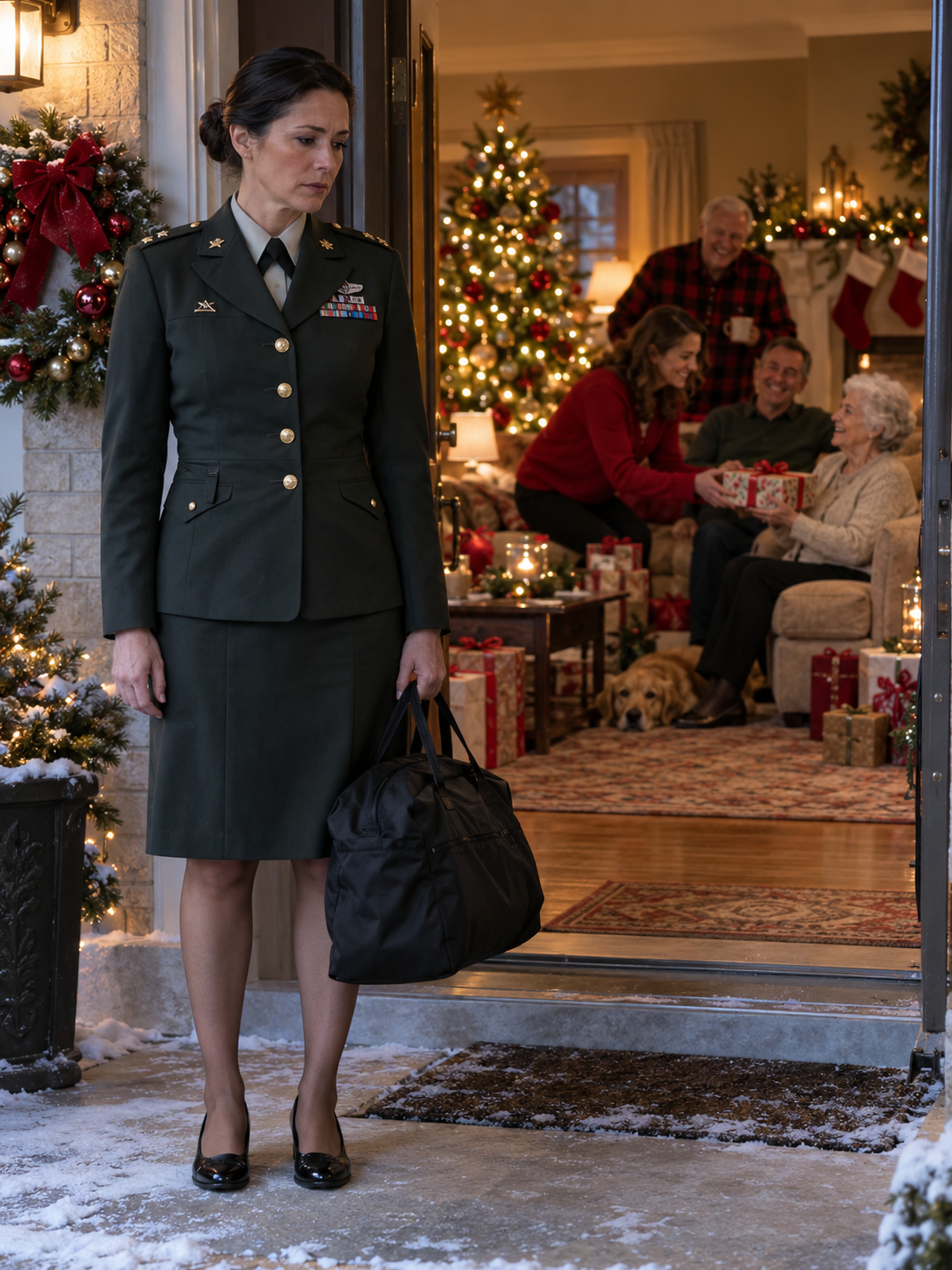
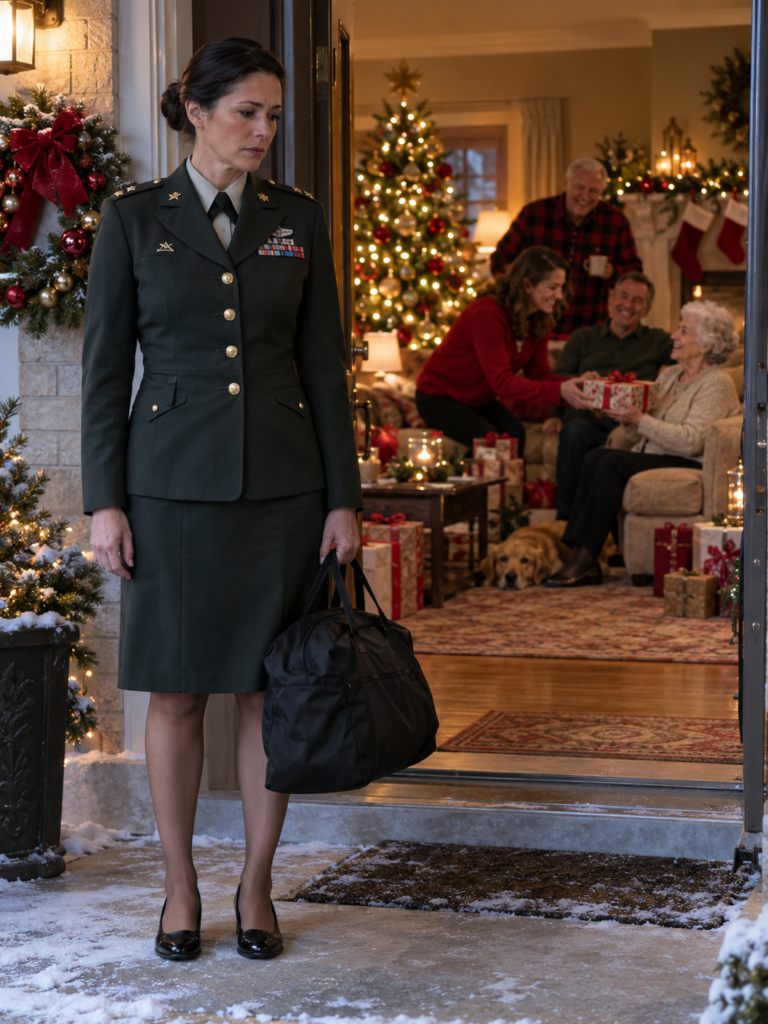
I did not say anything else. It was hard to explain that in my family, my success had somehow become a shared resource. I was a JAG officer. I had earned my way through college with ROTC, paid for law school myself, and spent years building a career and a life that stood on its own.
Still, whenever anyone needed something, there seemed to be one unspoken rule: Alex will handle it.
What my family did not know was that I had already made a major decision without asking anyone’s permission.
I had bought a ranch in Montana.
On January 25, I landed in Missoula and drove almost two hours toward the property. I wanted to see it alone. I needed that first moment to belong only to me and the land.
When I passed through the gate, I slowed down without thinking. The house was small—three bedrooms, one and a half bathrooms, a plain kitchen, and an old wood-burning stove. But behind it lay wide open pastureland. In the distance, mountains rose beneath the winter sky.
It was exactly what I had wanted.
Not a luxury home. Not an investment meant to impress anyone. A place that could truly be mine.
The first weeks were spent repairing and organizing everything. Earl, a sixty-two-year-old local craftsman, fixed parts of the house and outbuildings. Marcos reinforced the south wall of the barn and repaired several sections of fencing. I worked through the paperwork: county records, ranch registration, separate finances, and water rights.
Some of those water rights went back to the 1920s. Kira, a water-resources specialist, inspected the land and documents and confirmed that everything had been properly recorded. The ranch had a past, but it also had a strong future.
Later I met Bill Gruber at the county office. He told me cattle had been raised there until the late 1990s, after which the property had been mostly abandoned. I left his office knowing exactly what I wanted: to bring that place back to life.
Not quickly. Not to prove something to my family.
For myself.
In March, Vanessa sent me a message.
Have you changed your mind about the loan?
I replied with one word.
No.
A few minutes later, her answer appeared.
That’s really disappointing.
I put down my phone and went back to work.
By May, the ranch was beginning to feel like home. The house was warmer, the barn was secure, the fences held. I was also getting to know the neighbors. Hector had lived nearby for years, and his wife Maria knew every road and every story in the area.
While the ranch had stood unused, Hector had occasionally let a few of his animals graze in the eastern pasture. I told him he could continue through the end of summer. I would need the grass by September.
He nodded.
“It’s your land, Alex. You decide.”
I had no idea how important those words would become.
At the end of July, I returned to North Carolina for work. The ranch remained peaceful—until a call came one afternoon in August.
“Alex,” Hector said, “I saw your mother on your property today.”
I sat up straight.
“Was she alone?”
“No. She had a man with her.”
A few seconds later, he sent a photo. A gray sedan. My mother. And a stranger carrying a folder.
I called my attorney, Patricia Simmons.
“Do you have cameras?” she asked.
“Yes.”
“Check the footage.”
I logged into the system. The car had arrived at 2:14 p.m. The man stepped out first, looked around the house, made notes, and then entered the barn with my mother. Eleven minutes later, they left.
The man was a real-estate agent.
Robert Cain.
I called my mother.
“Mom, why did you bring a real-estate agent to my ranch?”
The silence on the other end lasted too long.
“Alex, I only wanted to talk to you.”
“About what?”
“Vanessa. Her business is doing better, and she needs more space to work.”
“And?”
“We thought the ranch could be used.”
I closed my eyes.
“The ranch is mine.”
“We know that.”
“Then why did you bring an agent there without asking me?”
She hesitated.
“We only wanted to know what it might be worth.”
“To sell it?”
“Alex…”
“To sell my ranch and finance Vanessa?”
Finally, she said it.
“We thought you would refuse if we asked first.”
That sentence told me everything. They knew I would say no, so they had decided to act before giving me the chance.
“You entered my property with a real-estate agent without my permission,” I said calmly.
“We’re your family.”
“Being my family does not give you the right to make decisions about my property.”
I asked for the agent’s full name, ended the call, and contacted Patricia. She reached out to the brokerage immediately. Their answer was simple: the ranch had never been officially listed. Cain had been told the owner might be open to a sale, but I had never authorized that information.
Patricia prepared a formal notice. I contacted the sheriff’s office so there would be an official record. Lieutenant Garcia took my statement.
“Documentation will matter,” he told me.
“That is exactly what I want.”
I also had clear signs placed around the property. A few days later, the brokerage confirmed it had ended its relationship with Cain after learning what had happened. Through her attorney, my mother signed a statement acknowledging that she could not enter the ranch or present it to buyers without my permission.
My father called shortly afterward.
“We handled this badly.”
“Yes, you did.”
“We wanted to help Vanessa.”
“You decided what to do with something that belongs to me.”
He was quiet.
“I don’t want to fight with you,” I said. “But from now on, you have to respect my boundaries.”
He promised to speak with my mother. After we hung up, I stepped onto the porch. The mountains were still there—silent, unmoving, untouched by our family conflict.
Outside that house, the world kept going. But something inside me had shifted. I no longer felt obliged to explain every choice I made.
In September, the first animals arrived: eight young Angus cattle. When the truck opened its gate and they moved into the pasture, the ranch finally felt alive.
Hector helped me. Maria arrived with food and advice. Earl continued with smaller repairs. And I learned: fences, water, soil, animals. I had not grown up on a ranch, but I was not afraid to learn.
Several months later, Vanessa wrote me a letter. It was not about her business. She did not ask for money. She asked only one question.
Do you still want us to be part of your life?
I read it several times before I answered.
Yes. But you need to understand something. The ranch is mine. My money is mine. My decisions are mine. When I say no, it does not mean I do not love you. It means no. If you can respect that, then yes, I still want you in my life.
Vanessa called a few days later. We talked for a long time. She admitted that she had grown up believing one person’s resources were available to everyone in the family. She also admitted she had always assumed I would eventually help her.
I told her that if she wanted our relationship to change, promises were not enough. She would have to show me through her actions.
She came to the ranch that September. At first she knew almost nothing about animals, but she asked questions. She listened to Hector and took Maria’s advice. Most importantly, she stopped trying to make decisions for me.
It was a small change. But it was real.
My parents needed more time. In October, they called me together. My father spoke first.
“We understand something now.”
“What?”
“We treated your independence as if it belonged to the family too.”
I said nothing.
“We were wrong.”
I had not expected those words.
“Thank you for admitting it,” I replied.
Nothing was fixed overnight, but at least we had begun speaking differently.
The ranch continued to grow. The original eight cattle were soon joined by fourteen more. Twenty-two in total. Earl and Grace started coming for dinner. Hector and Maria stopped by regularly. Vanessa returned whenever she could.
The house I had bought to have a place of my own slowly became a place shared with people who had learned to respect that space. That made all the difference.
At the same time, I continued my work as a JAG officer. One case involved Davis, a twenty-three-year-old Marine who had signed a financial agreement that raised serious concerns under protections for service members. When he came into my office, he looked embarrassed that he had needed help.
“Asking for help does not make you irresponsible,” I told him.
We reviewed the documents, rebuilt the timeline, and worked through the case. In the end, Davis received compensation, and the company changed some of its practices.
When he returned to close the matter, he thanked me.
“You took what happened to me seriously.”
“It’s my job.”
“You did more than I expected.”
I smiled.
“I simply did what needed to be done.”
That sentence captured what the ranch had taught me, too. You do not always have to convince other people. Sometimes, you only need to know what is yours to decide and do what needs to be done.
The following winter, I spent several days at the ranch. One morning, I went outside early. A light frost covered the pasture, and all twenty-two cattle moved slowly through the field. I checked the fences. Then the water. Everything was working.
I looked toward the mountains and remembered my first day there: the empty house, the paperwork, the repairs, and my parents believing they could decide what I should do with my own property.
They had thought I would give in.
I did not.
I had not protected the ranch by shouting. I protected it with records, clear boundaries, and thoughtful decisions. And I learned something important: saying no does not mean you stop loving someone. Sometimes it means you finally begin respecting yourself.
A few months later, Vanessa came to visit again. We walked beside the pasture. She looked at the cattle, then the house, then the mountains.
“I used to think this was just land,” she said.
“And now?”
She smiled.
“Now I understand why it matters so much to you.”
“It took you a while.”
We kept walking. Then she said, “Thank you for leaving a place for me in your life.”
I shook my head.
“I didn’t give you a place. I let you in. That’s not the same thing.”
She laughed.
“Maybe you’re right.”
That night, we all had dinner together. Our family was not perfect, and it probably never would be. But my parents had learned to ask instead of assume. Vanessa had learned that my boundaries were not a personal attack. And I had learned that I could love my family without handing over what I had built.
Two years after I arrived, I stepped outside one morning with a cup of coffee. The twenty-two cattle moved peacefully across the pasture. The stream ran through the grass. The wind moved softly across the land. The mountains still held the horizon.
I thought about the time when I believed I had to please everyone to be a good daughter. I thought refusing to fund Vanessa made me selfish. I thought boundaries only created conflict.
I had learned the opposite.
You can love people without giving them control over your life. You can help without becoming responsible for everything. You can say no without living with guilt. And you can build something that looks like you.
The ranch was no longer just property. It was proof of my independence. Every fence carried part of my story. Every repair marked a decision. Every animal represented a new responsibility. And every person at my table had earned that place by respecting my boundaries.
The deed had made the purchase official. The records had confirmed my rights. The cameras had preserved the facts when my family crossed a line. The law had clarified what needed to be clarified.
But the ranch meant far more than a legal document.
It was the moment I stopped waiting for other people’s permission to choose my own life.
I could not choose the family I was born into. But I could choose the boundaries I set, the people I allowed close, and the life I built. I could choose not to feel ashamed for protecting what was mine.
I looked once more across the pasture. The wind moved gently. The cattle kept walking. The mountains stayed still.
For the first time in a long time, I had nothing left to prove.
I was simply home.