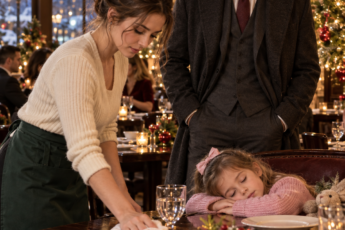
“Your grandfather only left you that because he felt sorry for you.”
Those were the words my adoptive father, Richard, spoke on the afternoon we buried the only person in that family who had ever called me his daughter without hesitation.
Five years later, I could still hear the sound of that debit card hitting the dining room table.
It landed between dirty dishes, fading funeral flowers, and a silence that still smelled like grief.
When I picked it up, I didn’t feel grateful.
I felt humiliated.
My name—Natalia Salgado—was printed across the blue plastic beneath the logo of Banco Unión Nacional.
Richard leaned against the doorway, still wearing his black funeral suit with his tie hanging loose, as if exhaustion gave him permission to be cruel.
“It’s twenty thousand pesos,” he said flatly. “Your grandfather wanted you to have something. I don’t know why, but that’s all there is. Don’t make a scene.”
I looked at the card.
Then I looked toward the living room, where my grandfather Ernesto’s portrait still stood beside a single white candle.
Ernesto Salgado wasn’t my biological grandfather.
But he was the only grandfather who had ever truly loved me.
When I arrived at that house at eight years old with a pink backpack, two changes of clothes, and more fear than words, everyone treated me like I was only passing through.
My adoptive mother called me “the girl” long after the adoption papers were signed.
My cousins introduced me as “the one they adopted.”
Richard corrected me every time I referred to them as my family, as though I hadn’t earned the right to say those words.
Grandpa Ernesto never did.
He taught me how to ride a bicycle on the quiet streets of Colonia Del Valle, even after I crashed four times and cried out of embarrassment.
He came to my school performances whenever no one else bothered.
He kept every report card I brought home inside an old brown folder and proudly told everyone,
“This girl is going to do great things someday.”
When I decided to join the Army, Richard laughed.
“So now you’re pretending to be tough?”
Grandpa simply took me out for breakfast.
Over a plate of chilaquiles, he wrote three short sentences on a paper napkin.
Protect your documents.
Protect your character.
Protect your word.
I kept that napkin for years.
A month before he passed away, he showed me his old wristwatch.
It wasn’t expensive.
The leather strap was worn, and there was a scratch near the number three on the glass.
“When I’m gone,” he told me quietly, “this watch belongs to you.”
I begged him not to talk that way.
He squeezed my hand.
“Listen carefully, Natalia. The things we leave behind aren’t valuable because of their price. They’re valuable because they reveal who mattered.”
That was why, after the funeral, when Richard tossed the debit card across the table and told me it was all I would receive, I asked only one question.
“What about Grandpa’s watch?”
His expression hardened instantly.
“The watch stays with the family.”
It felt like someone had punched the air out of my lungs.
“I am family.”
Richard let out a dry laugh.
“Don’t fool yourself. My father cared about you, sure. That doesn’t change what you are.”
“What am I?”
He stepped close enough that only I could hear him.
“A responsibility we already fulfilled.”
I didn’t cry.
I didn’t yell.
Real heartbreak is often silent at first.
I packed my military backpack with two shirts, my documents, and Grandpa’s napkin.
I kept the debit card only because my hand closed around it before my pride could throw it away.
That night I slept on the couch in a friend’s apartment.
The card sat on the coffee table in front of me.
Without thinking, I bent it just enough to leave a white crease across the middle.
“I don’t want your pity,” I whispered.
Then I sealed it inside an envelope.
For the next five years…
I never touched it again.
I believed refusing to spend a single peso was my small victory.
Then one cold January morning, while moving into a new apartment in Mexico City, the envelope slipped from an old moving box.
The debit card slid across the floor and stopped at my boots.
Face up.
As if it had been waiting for me.
I could have thrown it away.
Maybe I should have.
Instead, I scheduled an appointment at Banco Unión Nacional to close the account once and for all.
I didn’t want the money.
I wanted to erase the final reminder of that day.
I arrived at the Reforma branch at 9:07 a.m.
Outside, traffic roared through the city.
Inside, everything looked spotless—polished floors, glass offices, stale coffee, and cold air conditioning.
My number was called.
B17.
The young woman behind the counter smiled politely.
Her name tag read Daniela.
“Good morning. How can I help you today?”
I placed the worn debit card on the counter.
“I’d like to close this account.”
She requested my identification and began typing.
At first, nothing seemed unusual.
Then…
Her fingers stopped moving.
She looked at the monitor.
Then at my ID.
Then back at the bent debit card.
“Ms. Salgado…”
“Have you ever used this card?”
“Never.”
“No withdrawals? No purchases? No balance inquiries?”
“Nothing.”
Daniela swallowed hard.
“Who told you this account only contained twenty thousand pesos?”
A strange weight settled in my chest.
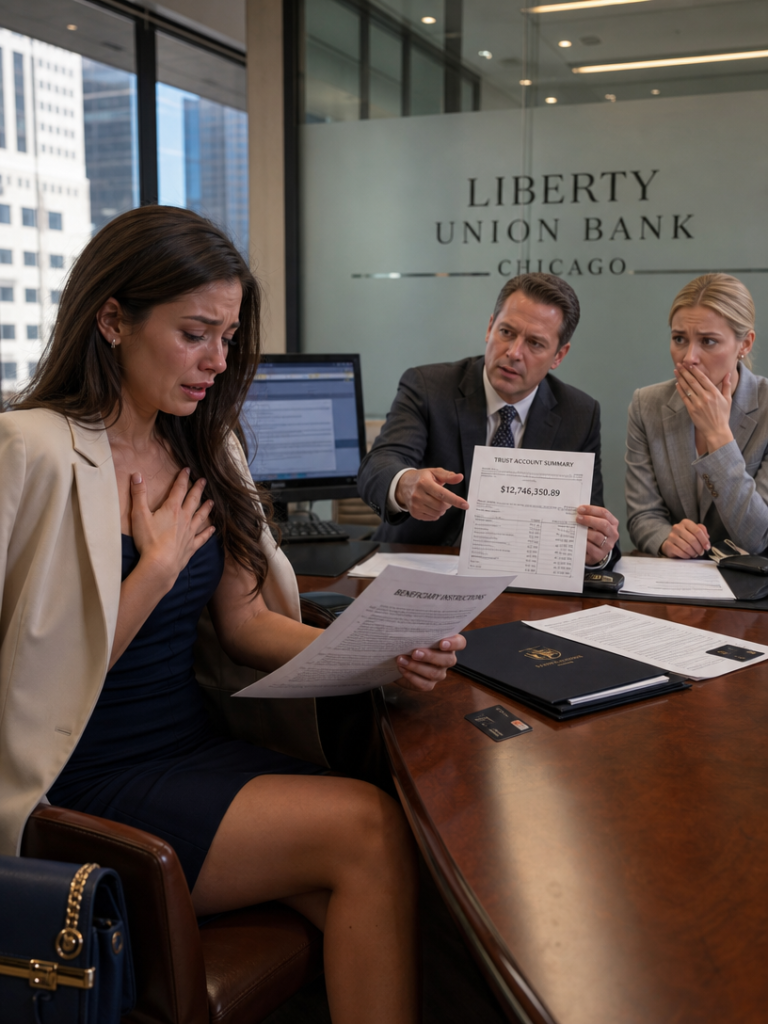
“My adoptive father.”
“He gave it to me after my grandfather’s funeral.”
She froze.
Then reached for the phone beside her desk.
“Mr. Rivas? Could you please come to Counter Four?”
She hesitated before adding,
“It’s a restricted account.”
The word sent a chill through me.
“I just want to close it,” I said.
Daniela lowered her voice.
“I don’t think this is about closing an account anymore.”
At that moment…
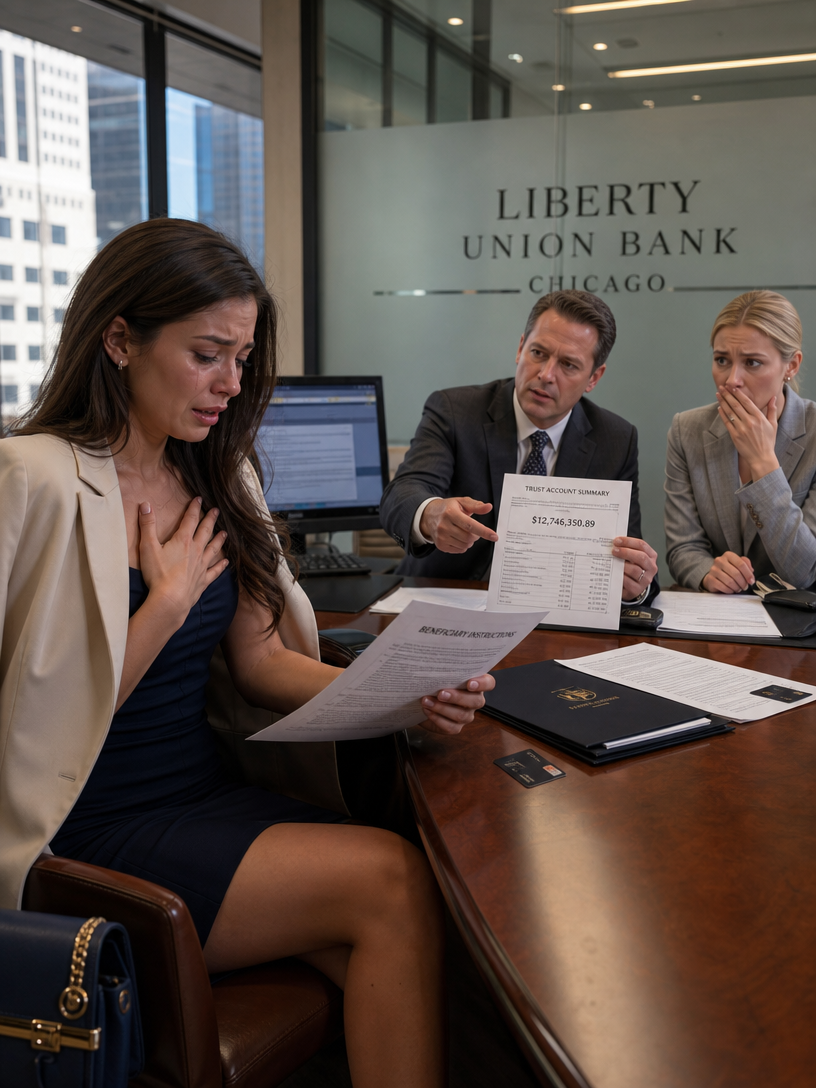
I had no idea the debit card Richard had thrown at me like charity was hiding a betrayal far greater than I had ever imagined.
👇 The rest of the story is below.