Valerie Hanks had been falling on ice since she was six years old.
As a child, she had learned to push herself up before anyone could reach her. At twenty-three, she could still do that. What she had not learned was how to let other people see the moment before she fell.
She sat on a bench just outside the rink, shoulders tense beneath her burgundy competition dress. The withdrawal form in her hands had been folded and unfolded until its creases were soft. Through the open entrance, she could see the pale ice, the rows of spectators, and five judges seated behind a long table.
Her name was next.
Emma, her closest friend, crouched in front of her.
“They’re ready for you,” she said.
Valerie kept her eyes on the paper. “Get my bag.”
Emma looked at her for a moment, then reached beneath the bench. The strap was tangled around one of the legs. She worked it loose and lifted the bag onto her shoulder.
Valerie watched her do it.
“Are we going?” Emma asked.
Valerie gave a small nod.
Emma stood. She did not remind Valerie how far she had come or tell her she would regret leaving. She simply shifted the bag’s weight and waited.
That quiet readiness made the decision feel heavier than the form.
“Wait,” Valerie said.
Emma lowered the bag to the bench again.
Four months earlier, Valerie had entered the national championships convinced that her preparation would carry her through.
She had saved enough to cover another competitive season. Her coach had built a program around her strengths. At the rink where she worked part-time, she taught children how to glide without clinging to the boards. She was patient with them, especially when they were afraid. She knew that confidence rarely arrived all at once.
Then, during the championship program, she missed a landing.
It was not an unusual fall. Her balance shifted, her blade slipped, and she landed hard enough to slide across the ice. She was back on her feet in seconds, but the mistake had unsettled her. Instead of pausing to regain her rhythm, she hurried toward the next element. Her movements became tight and uneven. She finished the program, but she could not stop thinking about the moment she had fallen.
By the evening, a short video of the mistake had begun circulating online. It showed the jump and the fall, then ended before Valerie could finish her routine.
At the hotel, she watched it in the bathroom with the shower running. Her roommate was in the next room, and Valerie did not want anyone to hear her cry.
She told herself she was studying the footage so she could understand what went wrong. She replayed it once, then again. Before long, she had moved from the video to the comments beneath it.
A few strangers were kind. Others had little patience for a skater who had made a mistake.
Valerie told herself those words meant nothing to her. Still, she remembered them.
Her ankle strain healed within three weeks. Her trust in the jump did not.
At quiet practice sessions before sunrise, Valerie could land her Axel. Some mornings, she managed it repeatedly. If someone entered the rink and paused to watch, her concentration disappeared. She would circle the ice, adjusting her gloves or checking her laces, until the person had moved on.
She withdrew from one local competition. Then she withdrew from another.
Her coach offered to shorten her program and change the element order. Emma came to practice and stood by the boards. Valerie thanked her, then asked her to leave.
The bills did not wait for her confidence to return. Valerie picked up more teaching shifts. She sold a dress she had worn at an earlier competition and stopped reserving private ice time. Each choice felt practical at first. Together, they began to look like an ending.
Then she saw an announcement from a winter touring company. The group was holding auditions for a six-month production. The contract included pay and shared accommodation, and performers would have regular time on the ice.
Valerie applied without telling her family or coach. She passed the first audition, then made it through a second round. Each step brought her closer to work she wanted—and closer to performing in front of people again.
For the final callback, the company had arranged a public preview evening. The finalists would perform a short technical passage on the rink while spectators watched. Valerie had known that was part of the process when she applied.
It seemed manageable when it was only a line on the application.
Now she was sitting beside the entrance with the rink in front of her and a withdrawal form beneath her hands.
She looked at Emma. “If I leave now, I’m finished.”
“Do you mean finished with tonight,” Emma asked, “or finished with skating?”
Valerie turned the paper over, then back again. “I don’t know.”
Emma sat beside her. “All right.”
Valerie frowned. “That’s it?”
“What do you want me to say?”
“I have no idea.”
An attendant approached, holding a clipboard. “Valerie? They’re ready for you at the entrance.”
“One moment,” Emma said.
The attendant nodded and stepped back.
The sound of a skate crossing the ice reached them from inside the arena. A few smooth strokes, a pause, then another scrape.
Valerie tried to imagine the rest of the evening if she withdrew. She would change out of the dress. She would tell her coach that the event had been too much. Later, she could tell people she had reconsidered the tour.
She had become skilled at making a retreat sound like a decision.
“I can’t do that jump while everyone’s watching,” she said.
“You did it in the second round.”
“There were only four people there.”
Emma nodded. “There are more tonight.”
Valerie looked toward the entrance. “What if I fall?”
“Then you get up.” Emma’s hand rested on the bag’s strap. “And I’ll still be here.”
Valerie lowered her gaze. The edge of the withdrawal form had darkened where her damp palm pressed against it. She set the paper on the bench.
Then she stood.
Her legs felt unsteady, though nothing was wrong with them. She stepped onto the rubber walkway and moved toward the gate. Beyond it, the judges waited at their table. One, a silver-haired woman, held a pen above her notes. Several rows back, a spectator lifted a phone.
Valerie’s stomach tightened. The old urge to turn around rose quickly.
She stopped at the gate, took one breath, and placed her right skate on the ice. Then she brought the left one down beside it.
The cold air touched her face. She pushed off.
Her first stroke was short and stiff. She reached for another. This one carried her a little farther. By the third, the blade found its edge and the familiar balance returned.
Valerie remembered something she often told her students: you do not have to fight the ice. Let your knees soften. Let your weight settle. Give the skate room to move.
She followed her own advice.
Her crossovers became smoother as she gained speed. She found the curve of the rink and carried her momentum into the first jump.
She landed cleanly and continued directly into the next element. At the boards, Emma’s fingers tightened around the strap of Valerie’s bag, but Valerie did not look over.
The footwork came next: a turn, a change of edge, another turn. Her breath was still quick, but she could feel the rhythm of the passage now. Each movement led into the next instead of feeling like a separate test.
Then she reached the setup for the double Axel.
The shape of the approach brought back the championship rink. She could almost feel the moment her blade had slipped, followed by the rush of panic as she tried to make up for it. Her shoulders began to tense. Her arms started closing too early.
For one instant, the old pattern was ready to take over.
Valerie noticed.
She let her arms open again. She waited for the edge. She bent her knee and made a small correction in her posture. It was not a dramatic move. From the stands, no one would have known she had changed anything.
Then she jumped.
The lights blurred as she turned. The audience vanished into the concentrated work of rotation and balance. Her right blade touched down with a slight tremble. She absorbed the movement through her knee, steadied her upper body, and held the landing long enough to skate away cleanly.
A surprised murmur rose behind her. Valerie heard it, but she kept her gaze on the next mark in her routine.
She moved into her spin, lowering into the position and tightening the rotation. The familiar pressure built beneath her blade. She counted silently, then opened her arms and came out of the spin under control.
At the end, Valerie reached her final position and held it.
For one heartbeat, the arena was still.
Then the applause began.
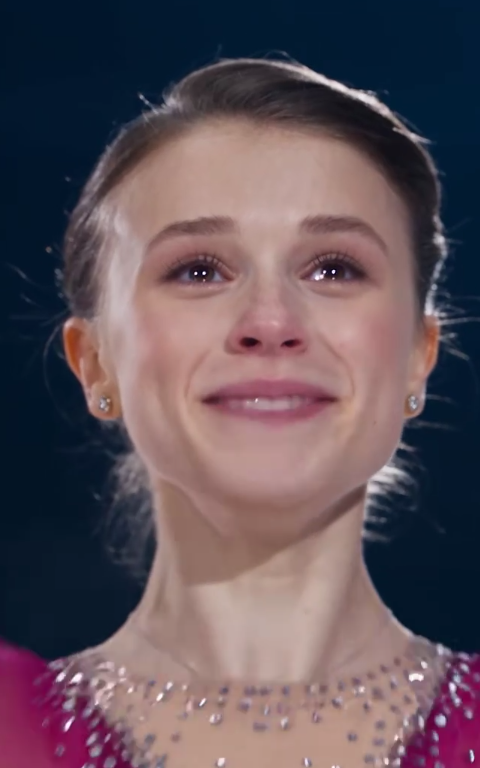
She lowered her arms. Her eyes stung, and she blinked quickly, embarrassed by the tears she could not quite hold back. It was only a thirty-second passage. Still, she had stayed on the ice through the part she had been afraid to face.
At the gate, Emma offered her the skate guards.
“Was it clean?” Valerie asked, still catching her breath.
“Yes.”
“The Axel?”
“You held it.”
Valerie nodded. She had another question, one she had been carrying since the championship, but this time she managed to say it aloud.
“Did I rush?”
Emma shook her head. “You gave yourself time.”
That answer undid her. Emma set down the bag and pulled her into a hug. For a few seconds, Valerie let herself lean on her friend without explaining anything.
She did not get one of the two featured positions on the tour. When the company announced the selections, she felt disappointment rise first, followed by a quieter sense of relief that she had completed the audition.
She applauded for the skaters who had been chosen.
Afterward, the director asked Valerie to stay. He offered her a place in the ensemble for the six-month tour. The contract included paid rehearsals and accommodation, along with the possibility of understudy work once she learned the production.
He also made the demands clear: unfamiliar rinks, long stretches of travel, and some days with two performances.
“Can you manage that schedule?” he asked.
Valerie glanced at Emma, who was waiting near the bench.
“Yes,” Valerie said. “I can.”
On the tour’s opening night, Valerie caught an edge during a group sequence and fell.
There was no time to study the moment or decide what it meant. She got back on her feet, found her place, and finished the performance.
Later, in the dressing room, she sat with her phone in her hand and stared at Emma’s name. She typed: I fell tonight.
A reply did not come right away. Valerie watched the screen, then added another message before Emma could answer.
You should have seen the rest.