The laughter stopped the moment I opened the folder resting on my knees.
My husband, Andrew Ellison, watched me with his usual arrogant smile. Beside him, his mother, Ruth, and his father, Frank, seemed certain I would accept any settlement just to end our divorce.
I had come to court without a lawyer.
They had hired one of the most prestigious law firms in the city.
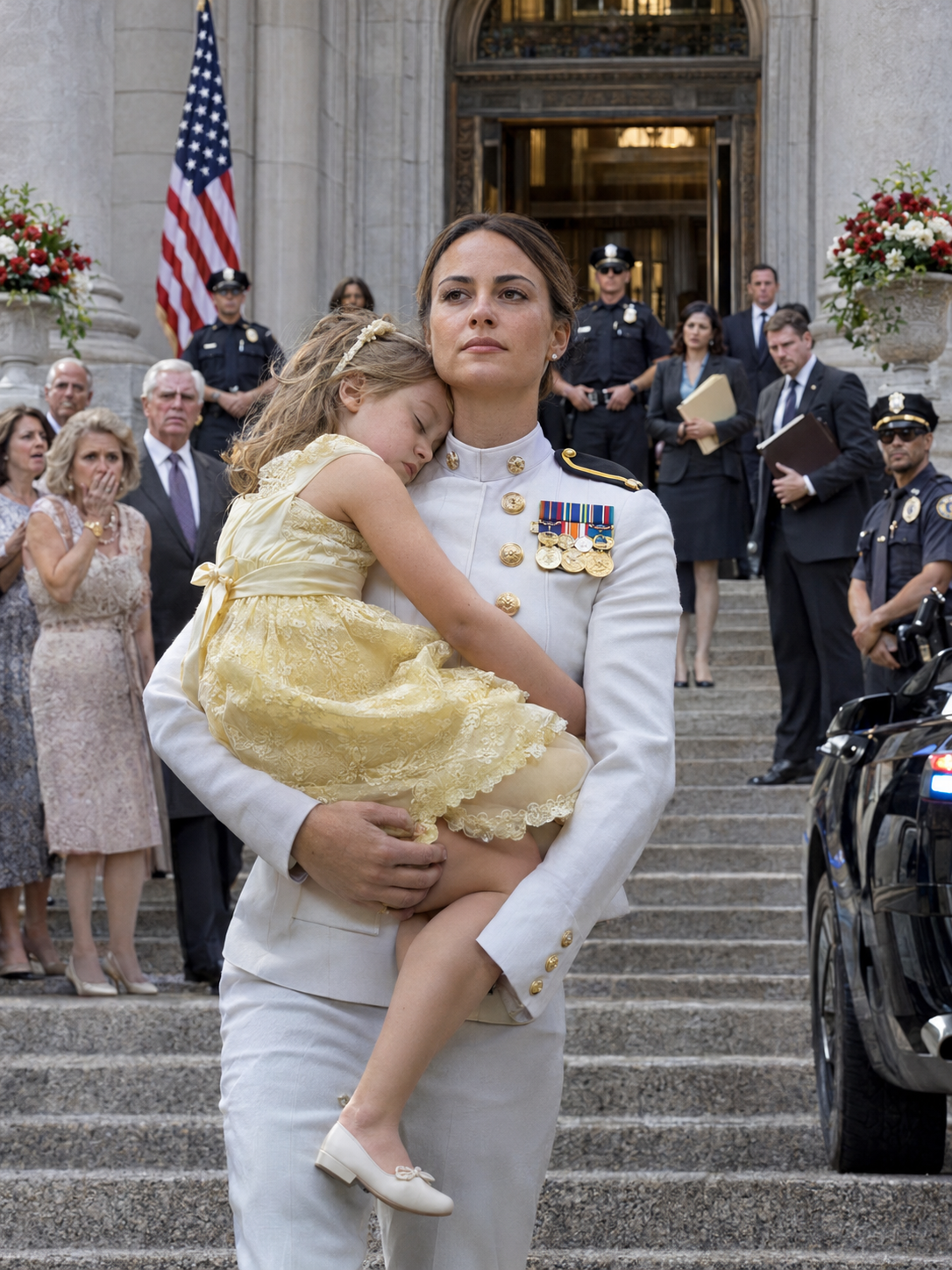
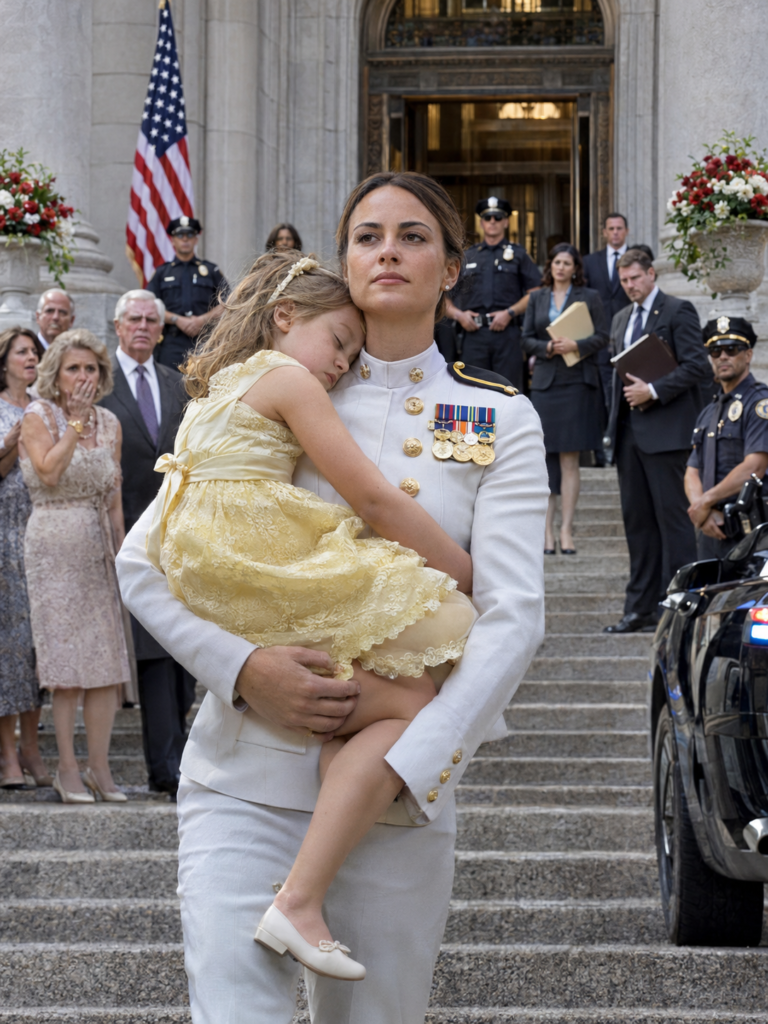
But they had forgotten one thing: before I became Andrew’s wife, I had been Captain Mara Pierce.
I had learned to examine documents, spot inconsistencies, and stay calm in difficult situations.
That morning, I had no intention of letting them intimidate me.
“Your Honor,” I said, addressing Judge Elaine Porter, “I’d like to challenge the authenticity of the signature on the divorce agreement.”
Stephen Calder, Andrew’s lawyer, stood up immediately.
“This document was properly filed and contains all the required certifications.”
“Then you shouldn’t have any objection to verifying where it came from,” I replied.
The judge allowed me to continue.
Calder claimed I had signed the agreement on September 14 at 3:30 p.m. at the Ellison residence.
I took out my first piece of evidence.
“At that time, I was hospitalized at Walter Reed National Military Medical Center.”
I handed the court certified copies of my medical records.
That day, I had undergone emergency surgery.
The operation began at 2:46 p.m. and ended at 4:18.
It was impossible for me to have been at the hospital and at the Ellisons’ home at the same time.
Andrew’s smile vanished.
Calder tried to suggest it might have been an administrative error.
But I had prepared more evidence.
I submitted a preliminary handwriting analysis and a document I had signed seven years earlier.
The two signatures were so precisely alike that they suggested one may have been copied from the other.
Judge Porter explained that further review would be needed before reaching a final conclusion.
I accepted that without argument.
I wasn’t expecting to win everything that day.
I simply wanted to make sure a disputed agreement wasn’t approved without a serious examination.
Andrew stared at me as if he no longer recognized me.
He had probably grown used to his wife lowering her eyes whenever his mother criticized her.
But I was done staying silent.
Seven years earlier, when we first met, Andrew had seemed thoughtful.
He supported me as I transitioned from military service to civilian life. But shortly before our wedding, he asked me to sign several financial documents.
The first version contained authorizations I didn’t understand.
I refused to sign it.
Andrew insisted, then presented a different document that only confirmed certain information about my assets.
I signed it and kept a copy.
Now it seemed that my old signature had been reused on our divorce agreement.
But the problem went much deeper.
During my research, I discovered that my name appeared in the records of Ellison Development Holdings.
According to an official filing, I was listed as the beneficial owner of a 38 percent stake held through a trust.
No one had ever explained that to me.
“Your Honor, I’m also asking that this information be verified,” I said.
Frank Ellison jumped to his feet.
“This is ridiculous!”
The judge ordered him to sit down.
Andrew looked confused.
“My father handled those matters,” he muttered.
I looked at him.
“Then he’ll have to explain why my name is on those documents.”
During a short recess, Andrew came over to me.
“Mara, can we talk in private?”
“You had weeks to offer a transparent settlement.”
He leaned closer.
“You don’t understand what could happen if you keep looking into those accounts.”
“Then explain it to me.”
He lowered his voice.
“They could go after Daniel.”
I froze.
“What did you just say?”
Andrew immediately seemed to regret saying it.
Before I could press him, Calder called his name.
My husband walked away without answering.
I stood there, my heart pounding.
Daniel Pierce was my younger brother.
And twelve years earlier, my family had been told he was dead.
When the hearing resumed, I presented several records from the Ellison Family Foundation.
Officially, the foundation funded scholarships for the children of fallen service members.
I had personally taken part in its fundraising campaigns.
But some of the transactions had troubled me.
Payments appeared under the names of beneficiaries who seemed not to exist—or who apparently had never received the amounts listed.
One name kept appearing:
D. Pierce.
The transfers connected to that beneficiary totaled more than four million dollars over six years.
According to the internal records, the beneficiary was Daniel Pierce.
My brother.
“Your Honor,” I explained, “twelve years ago, my family was told that Daniel had died during a military mission.”
A deep silence fell over the courtroom.
“I can’t say whether these payments were illegal. But I’m asking that the records be preserved and investigated.”
Judge Porter agreed that the disputed financial records needed to be examined.
The divorce agreement would not be approved that day.
After the hearing, Ruth approached me.
Her face was pale.
“You have no idea what you’ve just set in motion,” she whispered.
“Then explain it to me.”
She glanced nervously around the room.
Then she said something I would never forget:
“Your brother should have stayed dead.”
I stared at her.
“What do you know about Daniel?”
Ruth stepped back.
Frank appeared and led her toward the exit.
Before I could follow them, someone touched my shoulder.
It was an older woman wearing a gray coat.
“Captain Pierce?”
The title caught me off guard.
“Do we know each other?”
“My name is Helen Ward. My son, Michael, served in the Army with your brother.”
She took out a photograph.
Three men in uniform stood beside a military vehicle.
I recognized Daniel immediately.
Helen also showed me Michael’s military identification.
“Michael died six months ago,” she explained. “Before he passed, he asked me to find you.”
My eyes filled with tears.
“Why?”
Helen hesitated.
“Because my son said Daniel was still alive six months ago.”
I could hardly breathe.
Then she handed me a piece of paper with an address and a short message:
“Mara, don’t trust the Ellison family.”
The handwriting looked like my brother’s.
“Where is Daniel?”
“I don’t know.”
Helen suddenly looked over my shoulder. Her expression changed.
“Don’t turn around yet. The man who followed me is here.”
Near the entrance, I recognized Thomas Vale.
He had once been Frank Ellison’s business partner. He had attended my wedding and even Daniel’s funeral.
Helen pointed to the military photograph.
Thomas was in it, too.
“Michael called him the Colonel,” she whispered.
Before I could react, a message arrived from an unknown number.
It contained a recent photograph of a man sitting in a dimly lit room.
His face was thinner, and his hair was longer.
But I recognized his eyes.
It was Daniel.
A second message arrived right away:
“If you want to see your brother again, bring the original ownership document to the Ellison estate. Come alone.”
I looked at Helen.
“I’m not going there without help.”
I took out my phone and called Colonel Bennett, a former military investigator I trusted.
I told him everything.
There was a long silence.
Then he said:
“Mara, in the confidential file I reviewed, Daniel wasn’t listed among the dead. He was identified as a surviving witness.”
I gripped the edge of a bench.
“A witness to what?”
His answer chilled me.
“To an operation connected to the source of Frank Ellison’s fortune.”
I was about to ask him to explain when I heard another voice on the other end of the call.
A voice I hadn’t heard in twelve years.
“Mara? It’s Daniel. Please, don’t hang up.”
—END OF PART 2—
KEEP READING PART 3 TO DISCOVER WHERE DANIEL HAD BEEN AND WHAT SECRET CONNECTED HIS DISAPPEARANCE TO THE ELLISONS’ FORTUNE.