I never imagined I would become a widow at twenty-nine.
Even stranger, I had known my husband for less than two weeks.
A year earlier, I had lost my mother, and grief had changed almost everything about my life. I stopped enjoying places that used to make me happy. Friends tried to help, but there were days when even ordinary conversations felt exhausting.
Eventually, I began volunteering at a local hospital.
I wasn’t trying to save anyone.
Mostly, I sat with patients who had few visitors. Sometimes we talked. Sometimes I read aloud. Sometimes we simply watched television together.
It gave me somewhere useful to put the love I no longer knew what to do with.
That was how I met Julian.
He was seventy-two and seriously ill with heart failure.
The first time I entered his room, he was staring through the window.
“You’re not a nurse,” he said.
“No.”
“Doctor?”
“No.”
He glanced at my volunteer badge.
“So you’re here voluntarily?”
I smiled.
“Apparently.”
He shook his head.
“Terrible decision.”
That made me laugh.
And somehow, that was the beginning.
Julian had a dry sense of humor and an extraordinary ability to change the subject whenever conversations became too personal.
He asked about my childhood.
My favorite books.
The worst meal I’d ever cooked.
Whether I believed people could become completely different late in life.
But whenever I asked about him, his answers became vague.
He said he’d spent years working.
He had traveled.
He’d made mistakes.
And he had almost no one left.
“Family?” I asked once.
“Complicated.”
“Friends?”
“Most disappeared before my hair did.”
I assumed he was joking.
But nobody visited him.
Days passed.
I found myself looking forward to seeing him.
Then one afternoon, Julian surprised me.
His room was unusually quiet when he reached across the blanket and took my hand.
“Nora, I need to ask you something ridiculous.”
“That sounds promising.”
“Marry me.”
I thought he was joking.
He wasn’t.
“Julian…”
“I know.”
“You barely know me.”
“That’s true.”
“And you’re very ill.”
“I’ve noticed.”
I pulled my chair closer.
“Why would you ask me that?”
For once, his humor disappeared.
He looked toward the window.
“I’ve spent most of my life surrounded by people, yet somehow I reached the end with almost nobody beside me.”
I didn’t know what to say.
He continued quietly.
“I don’t want my last days to feel like I’m just another name on a hospital chart.”
“You aren’t.”
“I know that when you’re here.”
That answer stayed with me.
Still, marriage seemed absurd.
I told him so.
Julian didn’t pressure me.
“If you say no, you’ll still be the kindest person I’ve met in years.”
I went home that evening thinking about my mother.
During her final weeks, what frightened her wasn’t simply illness.
It was loneliness.
She had once told me that when life becomes small, the person sitting beside you can become your entire world.
Two days later, I returned to Julian’s room.
“Are you still proposing?”
He stared at me.
Then smiled.
“Unfortunately, yes.”
Our wedding happened that afternoon.
There were no flowers.
No photographer.
No elaborate dress.
I wore a yellow sweater and jeans.
A chaplain performed a simple ceremony while two hospital employees served as witnesses.
We didn’t even have rings.
Julian searched around his bedside table, noticed an unopened soda can, and laughed.
A few seconds later, he slipped the little metal pull tab onto my finger.
“There,” he said. “Very expensive.”
“At least three cents.”
“Don’t lose it.”
I still have it.
The following week was unlike anything I had experienced.
Marriage didn’t suddenly transform us into a conventional couple.
We remained two people who had met under unusual circumstances.
But something changed.
Julian seemed calmer.
We talked for hours whenever he had enough energy.
He told me stories he’d avoided before.
About traveling alone.
About working too much.
About friendships he’d neglected.
About decisions he wished he could change.
Yet one subject remained strangely off-limits.
His life before the hospital.
Whenever I asked where he’d lived or what kind of work he’d done, he smiled.
“Later.”
“There might not be a later.”
“I know.”
That was exactly why his answer bothered me.
On our sixth evening as husband and wife, he asked me to promise something.
“After I’m gone, someone will come looking for you.”
I thought medication was making him confused.
“Who?”
“A man named Mr. Ellis.”
“Who’s Mr. Ellis?”
“My attorney.”
I raised an eyebrow.
“You have an attorney?”
“Everyone should have one. They’re useful when people start arguing over things.”
“What things?”
He smiled faintly.
“You ask too many questions.”
“And you answer too few.”
His expression softened.
“When he gives you something, don’t make any decisions immediately.”
“What is he giving me?”
“You’ll understand.”
I tried asking again.
Julian closed his eyes.
Conversation over.
The next morning, his condition worsened.
I stayed.
Hours passed quietly.
There were nurses coming and going, soft conversations in the hallway, and long stretches when Julian seemed too tired to speak.
Near evening, he opened his eyes.
“Still here?” he whispered.
“Where else would I be?”
He looked toward my hand.
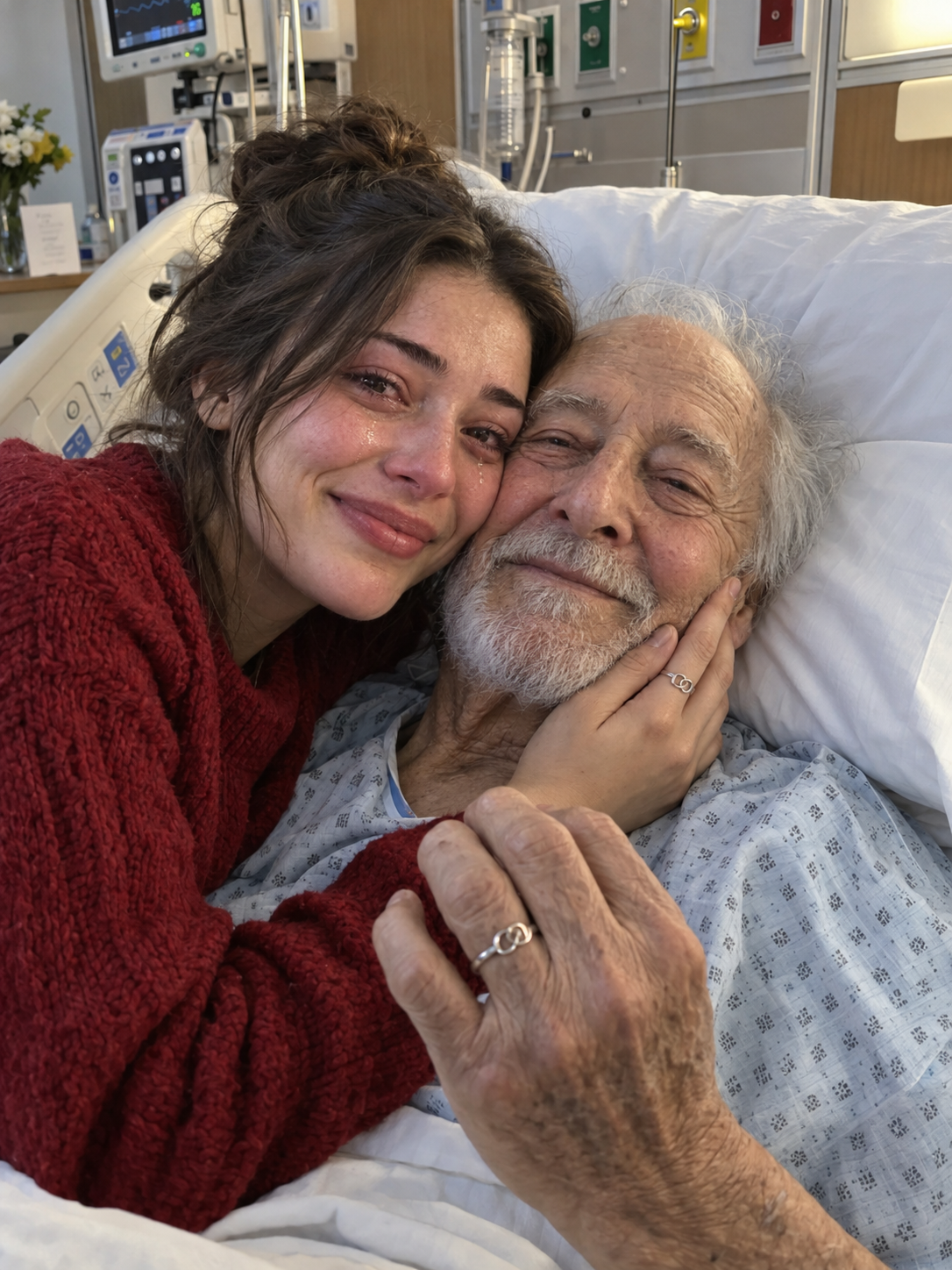
The soda-tab ring was still there.
That made him smile.
“Good.”
Those were among the last words he said to me.
Later, while I held his hand, Julian died peacefully.
I had known him for only a short time.
Yet when I walked into the hallway afterward, grief hit me with surprising force.
Perhaps grief doesn’t measure relationships in years.
Perhaps sometimes it measures what someone managed to mean while they were here.
I remained in his room for a while after everything became quiet.
Eventually, I gathered my coat.
That was when someone knocked.
An older gentleman stood in the doorway.
He wore a plain gray suit and carried a worn green backpack.
“Nora?”
“Yes?”
“My name is Thomas Ellis.”
The name immediately brought me back to Julian’s warning.
Mr. Ellis entered and gently closed the door.
“I represented Julian for many years.”
I looked at the backpack.
“He told me you’d come.”
“That doesn’t surprise me.”
The lawyer placed the bag on the chair between us.
“He instructed me to give this directly to you after his death.”
I hesitated before lifting it.
It was much heavier than I expected.
“What is this?”
“Something he believed you should see before anyone else contacted you.”
“Anyone else?”
Mr. Ellis didn’t answer immediately.
Instead, he studied me.
“Did Julian ever tell you his full history?”
“He told me almost nothing.”
“Did he explain what he did for a living?”
“No.”
“Did he tell you where he lived before entering the hospital?”
I shook my head.
The lawyer sighed.
“That sounds like Julian.”
My uneasiness grew.
“Mr. Ellis, what exactly did I marry into?”
He pulled a chair toward me.
“Before you open that backpack, I need you to understand something.”
I waited.
“The man you spent the last week caring for was genuinely grateful to you. Whatever you discover next doesn’t change that.”
That didn’t reassure me.
It frightened me.
I looked down at the faded green backpack.
There were no initials.
No expensive logo.
Nothing suggesting that it contained anything important.
“What did he hide from me?”
Mr. Ellis leaned forward.
“Julian spent his final months making sure nobody knew who you were.”
My fingers tightened around the strap.
“Why?”
“Because the moment certain people learn that he married you, they’re going to start asking questions.”
“What people?”
He nodded toward the backpack.
“The answers begin in there.”
I slowly opened the zipper.
On top was an old photograph.
Underneath it sat a sealed envelope with my name written across the front in Julian’s unmistakable handwriting.
There was also a small key.
And beneath those items was a thick folder of documents.
I looked at Mr. Ellis.
“What is all this?”
He took a long breath.
“Proof that the lonely man you met in this hospital had a life almost nobody here knew about.”
Then he pointed toward the envelope.
“And according to his instructions, Nora, you need to read his letter before I tell you anything else.”
I unfolded it.
The first line contained only seven words.
I read them twice.
Then a third time.
And suddenly I understood why Julian had asked a stranger to become his wife—and why he’d been so determined that nobody learn about our marriage until after he was gone.