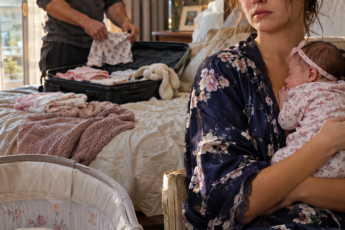
The name on the letter was Elena.
She was the woman waiting for my husband, Mark, in her car outside our house.
Beneath her name were two lines in his handwriting:
“Please contact Elena about my upcoming appointments. Sarah still thinks I need help at home. I’d rather explain everything once I’ve taken care of a few things.”
I read the words twice.
For three years, I had worked without a break, giving up my Sundays and time with our daughter, Sophie, because I believed Mark still needed my help.
But he had started walking again without telling me.
“How long has Elena known?” I asked.
Mark stared at the letter.
“Sarah, I can explain. But first, ask Sophie to go up to her room.”
I turned toward our daughter. She was eleven and still had her dance bag slung over one shoulder.
“Sweetheart, would you like to spend a little while at Mrs. Miller’s?”
Our neighbor often taught her how to bake cookies. Sophie nodded, then took hold of my wrist.
“Mom, I’m sorry I read your journal.”
I stroked her hair.
“You showed me something I needed to know. Now let me handle it.”
I walked her to our neighbor’s house.
When I returned to the kitchen, Mark had placed my journal on the table.
“At first, I could only walk for a few minutes,” he explained. “I still had bad days. I was afraid that if I told you, you’d think I was completely recovered.”
I looked at him. I knew how hard it had been. I’d stood by him through years of rehabilitation, back when moving one foot had seemed impossible.
“Mark, I would have kept helping you.”
My voice trembled.
“But maybe you could have made dinner once in a while. Or let me sleep an extra hour, knowing you could get yourself a glass of water.”
He didn’t answer.
His gaze fell on a page in the journal. It was Sophie’s birthday. I had written down that her new ballet slippers cost sixty-eight dollars.
That month, after paying the bills, I had only fifty-two dollars left.
Below that, I’d written:
“I promised Sophie we’d have breakfast together on Sunday. Then I was offered an extra shift. I said yes before I even checked the calendar.”
My heart tightened.
That was the page Sophie had wanted her father to see.
The numbers weren’t what hurt her most.
It was all the Sundays we had missed.
A knock came at the door.
It was Elena. She held her car keys in one hand.
“Mark, you told me Sarah knew about us.”
When she saw me, her expression changed.
“You said you were still living together only for Sophie.”
Mark tried to lift a suitcase, but Elena didn’t move.
I turned to her.
“Were you the one taking him to the clinic?”
She nodded.
“We met there. I was taking my father to his physical therapy appointments.”
She lowered her eyes.
“Mark told me you wanted me to take him so you could get some rest.”
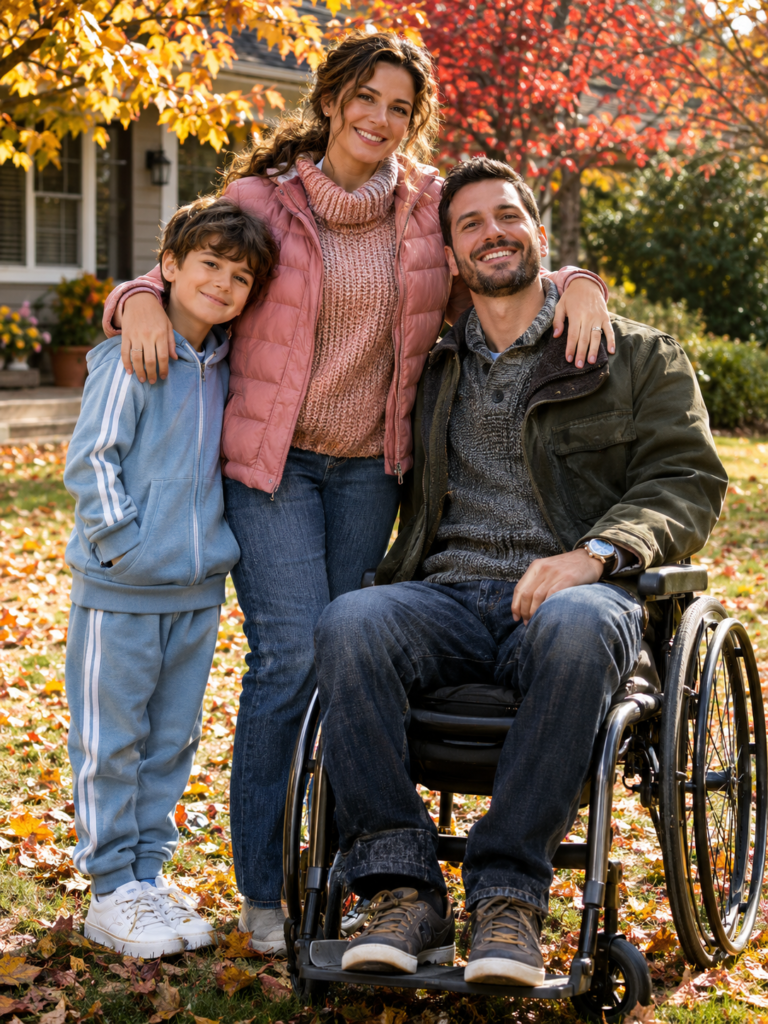
I remembered those mornings. Mark had told me the clinic was sending a car. I’d get ready for work, relieved that at least I could take Sophie to school.
“And when he started walking again, did he tell you?” I asked.
Elena tightened her grip on the keys.
“The day he managed to climb the stairs by himself, he invited me to dinner.”
I felt something break inside me.
While he celebrated his progress with another woman, I was still working and worrying about him.
Elena looked at the suitcase.
“Mark, you’ll need to find somewhere else to stay tonight.”
Then she walked down the porch steps. A moment later, we heard her car drive away.
Mark sat in Sophie’s chair.
“Sarah, we can still talk about this.”
“We can,” I said. “Tomorrow, we’ll talk about our daughter. But tonight, you had already decided to leave.”
He called his brother and waited on the porch with his suitcases.
A few minutes later, I brought him the cane he’d left by the coat rack. He took it and seemed about to say something.
But I had already closed the door.
That night, Sophie came to find me in the kitchen. She had taken out her bun, and her hair still had a crease from the elastic.
“Mom, if I hadn’t given Dad your journal, would he have stayed?”
I pulled a chair beside mine.
“He had already packed his bags by the time you got home from dance class.”
She lowered her head.
“He was so angry.”
“I know. I’m sorry he yelled at you.”
Sophie sat down and tucked her cold feet beneath my leg, the way she used to when she was little. Then she looked at me.
“Can I be mad at Dad and still want to see him?”
I took her hand.
“Of course, sweetheart. You’re allowed to feel both.”
We sat quietly for a while.
Then Sophie asked me a question.
“Can we have breakfast together on Sunday?”
I smiled.
“Of course.”
“I want to learn how to flip pancakes without breaking them.”
“Then we’ll make pancakes on Sunday.”
For the first time in a long while, I made a promise I didn’t want to postpone.
Over the next few months, I had difficult decisions to make. I took the letter and my journal to my lawyer. I reorganized my expenses and started paying down the debts we had accumulated during Mark’s rehabilitation. In our separation agreement, he agreed to cover part of them.
When his first payment arrived, I paid an overdue bill.
Then I put a note on the refrigerator with the date of Sophie’s next dance recital.
This time, I didn’t want to miss it.
But on the Saturday of the recital, I was offered an extra shift at work.
I was about to say yes.
It had become a habit. For years, I’d accepted every chance to earn a little more money.
But as I held my phone, I noticed the recital reminder on the refrigerator and stopped.
“I already have plans for Saturday,” I said.
For the first time, I didn’t feel guilty.
At the theater, Mark sat two rows ahead of me. His cane rested against his knee, and he held a bouquet of flowers on his lap.
For the past few months, he had been seeing Sophie regularly. He had even learned how to fix her bun when it came loose. He kept spare hairpins in his car.
Before the show began, he turned around.
“Sarah, can I tell you something?”
I looked at him.
“That night in the kitchen, I wanted to hurt you. I knew exactly what to say.”
He paused.
“I’m sorry.”
I had imagined that moment so many times. I thought I’d have a lot to say.
But all I said was, “I’m glad you told me.”
Then the lights went down, and the curtain rose.
Sophie appeared onstage with the other young dancers. For the first few steps, her lips moved slightly as she counted silently.
Halfway through the music, she lost the rhythm. For a moment, she looked at the other dancers to find her place. Then she caught the beat again and kept going.
At the end, she bowed so quickly that a hairpin fell from her hair.
I clapped as hard as I could.
I didn’t care that she’d made a small mistake.
I was there. Finally, I was there to watch her.
After the show, Sophie took her father’s flowers and hugged him. Then she ran over to me.
“Mom, can you hold my slippers? I want to carry the flowers.”
I bent down and opened her dance bag. The slippers were still warm. One of the ribbons was completely tangled. I gently worked it loose with my thumb, then put the slippers away.
Sophie shifted the bouquet to her other hand and slipped hers into mine.
“Tomorrow, I’m going to try to flip all the pancakes by myself,” she announced.
I smiled.
“Even the first one?”
She thought for a moment, then squeezed my hand.
“We’ll do the first one together.”
We left the theater. It was still light outside. We could have taken the shortest way home, but we weren’t in a hurry.
So we took the longer route.
We walked and talked about the show, the flowers, and breakfast the next morning.
For years, I thought loving my family meant sacrificing every minute, every bit of savings, and every wish of my own.
Now I was beginning to understand that Sophie didn’t need a mother who could do everything.
She needed a mother who was there.
I couldn’t get back all the Sundays we had lost. But I could make sure the ones ahead didn’t disappear from our calendar.
I squeezed my daughter’s hand. She smiled and kept telling me about the show.
As we walked home together, I realized our new life wouldn’t begin with some grand promise.
It would begin the next morning.
With a hot pan, a little batter, and the first pancake we flipped together.
THE END. ❤️