November 19, 2026 · By admin
“Firefly,” I replied.
A teaspoon hit the floor.
No one bent down to pick it up.
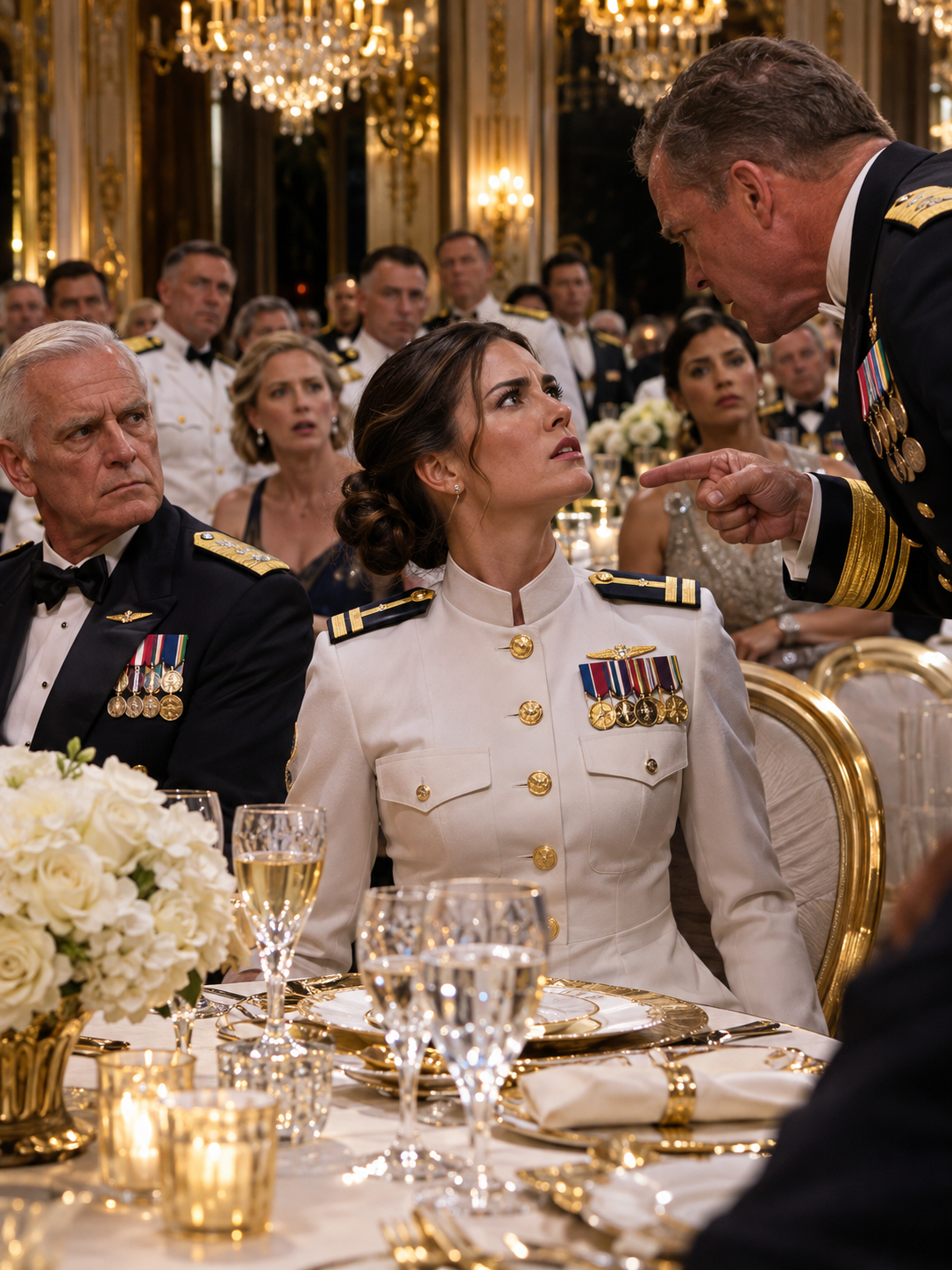
Colonel Richard Coleman, who had questioned my career as a pilot in front of everyone just minutes earlier, slowly set down his glass.
His face had gone pale.
“Firefly?” he repeated. “That night off Cape Hatteras?”
I nodded.
“That’s right.”
Coleman stared at me, stunned.
“I was on the second helicopter.”
“I know, Colonel.”
He ran a hand over his face.
“My God… it was you.”
My name is Claire Bennett, and that evening I was attending the birthday dinner of Admiral William Brooks, my partner Ethan’s father.
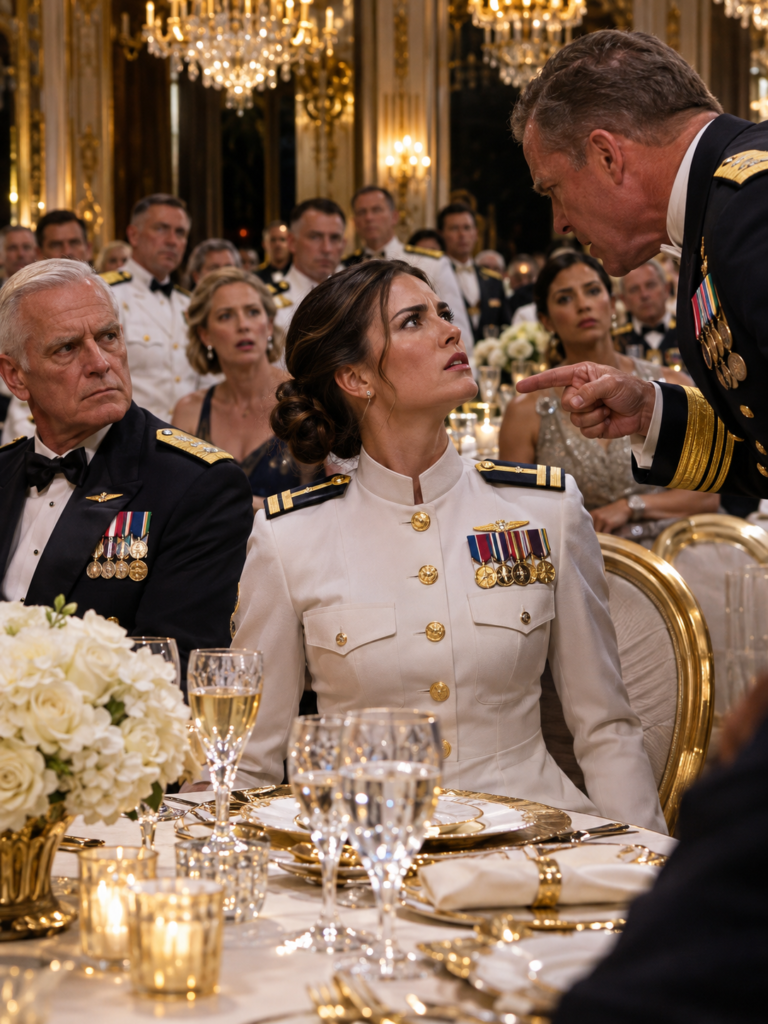
During dinner, Coleman had laughed when he learned I flew military aircraft. He seemed certain that a woman like me couldn’t hold that position.
Then he challenged me to prove it in front of the other officers.
I chose not to play along.
That was when Admiral Brooks asked me a simple question:
“Claire, what was your radio call sign?”
And when I answered, “Firefly,” the colonel stopped smiling.
Years earlier, I’d been on a training flight with my crew when we received an emergency call.
Two Marine helicopters were heading back toward the coast. The second had reported a critical situation and separated from the first in the middle of a violent storm.
We were ordered to stay in the area and relay communications between the crew and the station on the ground.
For nearly half an hour, we passed along their messages. The wind howled, and the rain made it almost impossible to see.
When we finally spotted the helicopter’s lights, they seemed to be moving only a few feet above the water.
My copilot kept watch on the aircraft. I stayed on the radio.
Then I heard a voice different from the pilot’s.
“Firefly, are you still there?”
“We’re here,” I answered.
A few minutes later, the same voice came back.
“Firefly, can you still hear me?”
“Yes. We’re still here.”
It was the voice of an officer seated on the left side of the helicopter. He sounded frightened. He kept saying the water looked much too close.
At one point, he told me something personal: his daughter had her first piano recital the following Saturday. He’d promised her he would be sitting in the front row.
I don’t remember exactly what I said to him. I only remember that I kept talking. I didn’t want the silence on the radio to make him feel as if we’d left him alone.
After what felt like forever, the crew finally reached the coast. We stayed in the air until we received confirmation that they had landed.
Everyone made it back safely.
The next day, I read the mission report. That was when I learned the name of the man I’d spoken with: Richard Coleman.
And now that man was sitting across from me, after trying to humiliate me.
I looked at him across the table.
“Colonel, did you make it to your daughter’s recital?”
Coleman looked up at once.
“You really remember that?”
“Of course.”
His voice trembled.
“Yes. I was in the front row.”
He paused.
“My daughter was so nervous that she had to start her piece over three times. On the fourth try, she played all the way through.”
I smiled.
“That must have been a wonderful evening.”
Coleman lowered his eyes.
“The best of my life.”
For a few seconds, no one spoke.
Then the colonel stood up.
“Claire, I owe you an apology.”
I looked at him.
“When you said you flew military aircraft, I made up my mind about you without knowing anything about you. I tried to make you look like a liar in front of everyone, without knowing what you’d done in service.”
He took a deep breath. He looked genuinely ashamed.
“I owe you an apology. And I would owe you one even if someone else had been on the radio that night.”
I nodded.
“I accept your apology, Colonel.”
Coleman sat down again.
Dinner slowly resumed, but something had changed.
Not because I’d proved I was a good pilot, but because someone had finally admitted I should never have had to prove it that way.
After dessert, I found Admiral Brooks by the window. He was holding a small plate with a piece of cake he’d saved for his grandson.
“How long have you known who I was?” I asked.
Brooks smiled.
“Since Ethan told me your name.”
I looked at him, surprised.
“I was in charge of the operation that night,” he continued. “The next morning, I listened to the communications recording.”
Then he asked:
“Do you remember the letter I sent to your crew?”
I nodded.
“Of course. We put it up in the crew room. Someone even left a coffee-cup ring on it.”
The admiral smiled, but his expression soon turned serious.
“When Richard asked you to prove who you were, I should have stepped in immediately.”
I stayed quiet.
“I shouldn’t have waited for you to say your call sign.”
I lowered my eyes.
“For a moment, I wondered if you were waiting for me to present evidence, too.”
Brooks nodded slowly.
“I understand.”
Laughter drifted in from the dining room. Ethan and his sister Natalie were playfully arguing over an old photograph of their father with a mustache he now insisted he’d never had.
I looked at the admiral.
“Happy birthday, William.”
He raised his eyes. It was the first time I’d called him by his first name.
“Thank you, Claire.”
Three weeks later, an envelope arrived.
Inside was a photograph and a short note from Colonel Coleman.
In the picture, a little girl in a green dress sat at a piano. The photo was slightly crooked. In one corner, I could see the tip of a man’s shoe.
Coleman had written:
“I took this from the front row. I told my daughter your story. She wanted you to have a copy.”
I turned the photograph over. Someone had written a message on the back in a different hand:
“Dad always says I had to start my piece over three times. It was really four. He stayed and waited. Thank you for waiting with him.”
I stared at those words for a long time.
For years, I’d remembered that mission through the roar of the wind and the voices distorted by interference. I’d never seen the little girl Coleman had told me about.
Now there she was, sitting at the piano. And her father was in the front row.
I hung the photograph on the refrigerator, beneath a crooked magnet Ethan had bought in Pensacola.
That evening, while we were making dinner, Ethan caught me looking at it.
“Do you think about that night much?” he asked.
“Every now and then.”
He came closer.
“Would you tell me about it?”
I looked at the photograph again.
I thought about the helicopter fighting against the wind, the voice that kept asking if we were still there, and the little girl who had started her piece again until she found the courage to finish it.
Then I smiled.
“I’d rather tell you about the piano recital.”
Ethan turned off the burner, pulled up a chair, and sat beside me.
This time, I didn’t have to defend my career. I didn’t have to explain my rank or prove anything.
I could simply tell a story that mattered to me.
Because when I thought about that night, I didn’t remember only helping a crew make it home. Most of all, I remembered the promise I’d made to a stranger over the radio: I wouldn’t leave him alone until he was safe.
And thanks to a photograph that arrived many years later, I finally knew how his story continued.
With a father sitting in the front row.
A little girl at the piano.
And someone who kept waiting, even after the music stopped.
THE END. ❤️