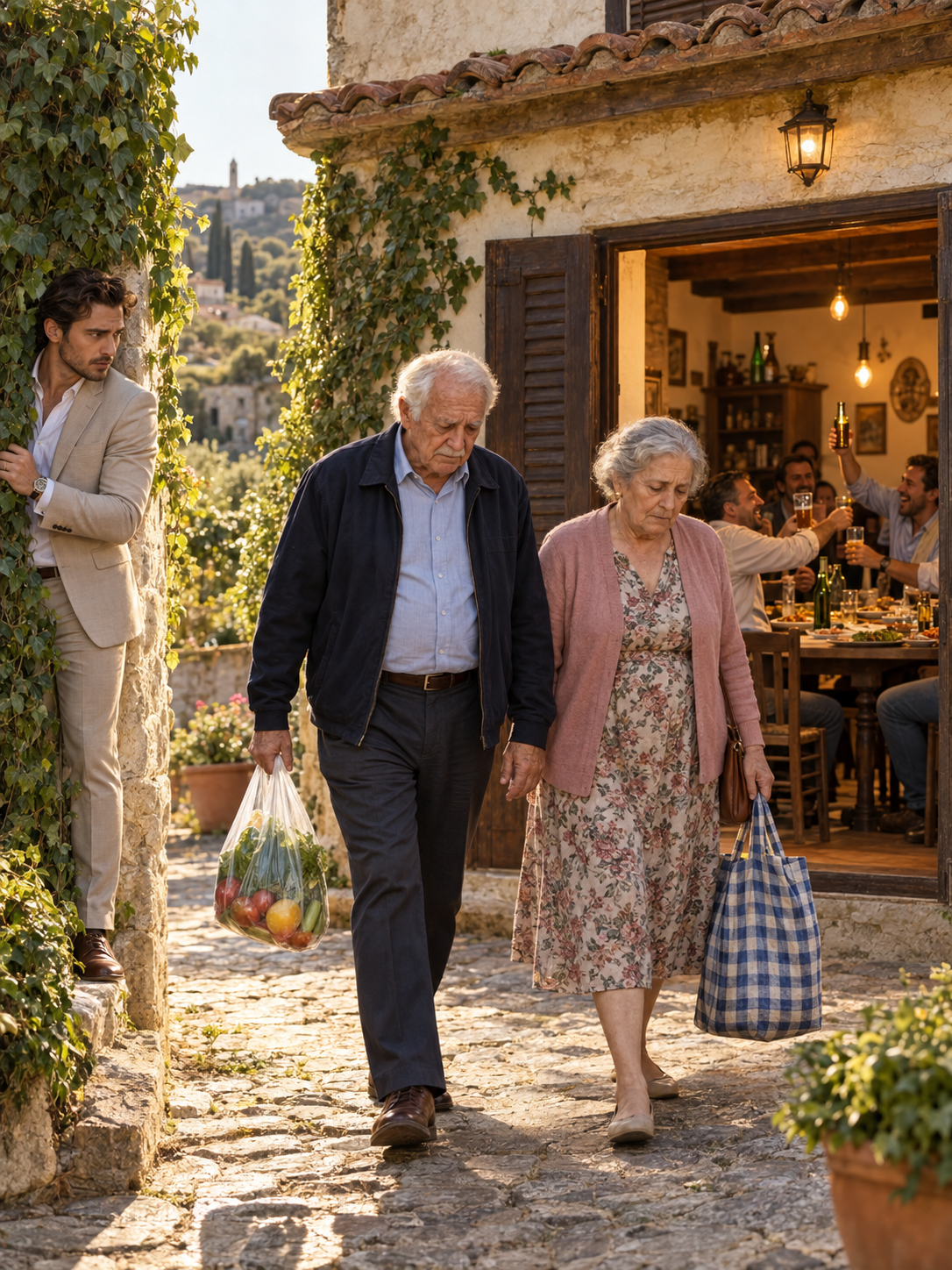
Night had already fallen when Alvin found his father standing beneath the old walnut tree. Manuel held a small rusted key in his palm as though it weighed far more than it looked.
Alvin looked at the house where he had grown up—the porch, the brick walls, the jasmine climbing near the windows. Everything was still there, yet nothing felt familiar anymore.
“Dad, what does that key open?”
Manuel did not answer at once. He looked toward the kitchen window, then closed his fingers around the key.
“I can’t explain it here.”
He walked toward the old shed, and Alvin followed. Inside, Carmen was sitting on a folding bed beside an open suitcase and a neat stack of clothes. When she saw her son, she stood and embraced him.
“We didn’t expect you tonight,” she whispered.
Alvin looked around. Two camp beds filled most of the room. A small table held a kettle and two cups, while suitcases leaned against the wall.
“How long have you been living here?”
Carmen lowered her eyes.
“Almost four months.”
Before that, his parents had slept in the guest room. Now Derek and Veronica needed more space in the house. That answer only made Alvin’s questions sharper.
Derek, his brother, had returned home the previous year with Veronica. They had asked to stay for a short time while they recovered financially. A few weeks became months. Veronica started handling household bills, insurance forms, and expenses, while Manuel—overwhelmed by paperwork—accepted her help.
“Is she managing your money too?” Alvin asked.
“She only helps us organize the budget,” Carmen said.
Every month, Alvin sent his parents a substantial amount for food, taxes, insurance, repairs, and daily needs. When he asked how much remained at the end of each month, neither of them could tell him. That worried him more than the folding beds.
Manuel took out the old key again.
“You wanted to know what it opens. Your grandfather built a cabinet in the workshop. Behind it is a compartment I kept hidden for years.”
In the old workshop, Manuel moved aside boards and tools. The key fitted a concealed lock perfectly. Behind the panel were folders, photographs, and yellowed envelopes. One bore Manuel’s name and a note addressed to both of his sons.
Their grandfather Mateo had helped purchase the property decades earlier. But part of the land and the workshop had been listed separately in the family records. Mateo had also left one clear instruction: the house must never become a reason for the family to turn against one another.
Alvin remembered Derek asking about old papers, property lines, and land plans. Manuel admitted he had signed documents without understanding all their consequences. Alvin called Inez, the lawyer now handling the family’s affairs.
Inez confirmed that a limited authorization had been registered in Derek’s name months before. He could handle certain administrative matters involving accounts, insurance, and the property, though the house still legally belonged to Manuel and Carmen. There had also been a recent request for official property records, and Inez was still checking who had made it.
Then Mateo’s papers revealed something else: the workshop and part of the land were connected to a family trust. Alvin and Derek were equal beneficiaries.
“Did Derek know?” Alvin asked.
“No,” Manuel replied.
“Then why did you tell him the land was meant only for me?”
Manuel was silent for a long time.
“I was afraid of what he might do if he believed he could depend on that money.”
Soon afterward, Inez called again. Some of the money from the family account had been used to help Derek and Veronica through their financial problems. The total was close to thirty-one thousand dollars.
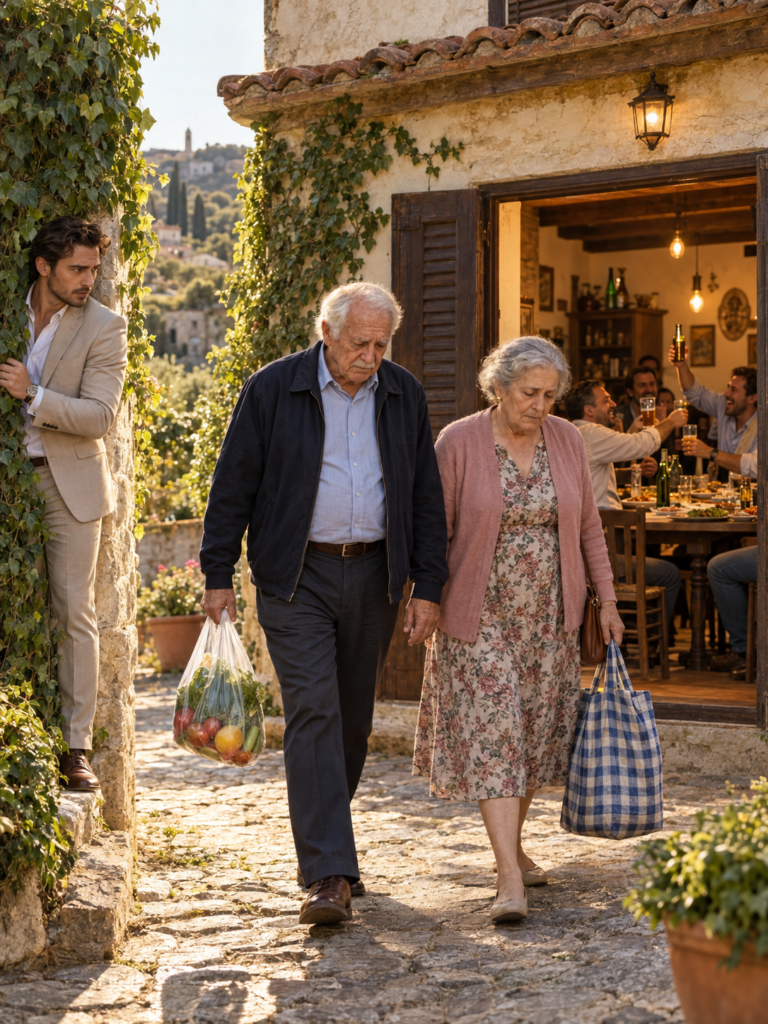
Manuel admitted that Derek had lost his job, accumulated debt, and risked losing essential possessions. He wanted to give his son time to recover, but he hid the situation from Carmen and Alvin.
Derek had invested in several small property projects with a partner. At first, everything seemed promising. Then costs rose, construction was delayed, and tenants left. Trying to cover those losses, Derek borrowed more money, sure that the next project would repair the damage. Instead, it made everything worse.
Alvin found him in the house that night.
“Why are Mom and Dad sleeping in a shed?”
Derek rubbed his face.
“I know how it looks.”
“This isn’t about appearances. It has become their bedroom.”
Derek explained that it had begun as a temporary arrangement. The guest room had a problem, then they stored belongings there, then Veronica needed space to work from home. Every decision was supposed to last only a few days. Four months passed.
“I was afraid you’d find out,” Derek said.
“Why?”
“Because you always arrive after things are already complicated. And because I’ve always felt that you thought you knew how I should live my life.”
The words hurt Alvin. After leaving for college and building his career, he had become used to sending money and fixing problems whenever he came home. He had also given Derek advice far too often.
Derek showed him a letter Manuel had written months earlier. Their father had said the old land could not become the answer to Derek’s financial trouble. Alvin finally understood that his brother might not be trying to claim the property. He wanted to know why their father had hidden part of their family history.
When Carmen learned the whole story, money was not what hurt her most. It was the fact that Manuel had made so many decisions in secret. At last, Manuel told them everything.
Mateo had bought that part of the land before the family house was built. He planned to construct a second home, but the plan never happened. Instead, he placed savings in a trust for three purposes: education, a genuine emergency, or a chance for someone to begin again after an honest mistake.
Nearly a year earlier, Derek had asked for a large sum to rescue his business. Manuel refused because he feared more money would only delay the problem. When Derek asked whether Mateo had left anything for the grandchildren, Manuel began changing the story about the land.
“I thought I could protect everyone by deciding alone,” Manuel said.
“And you created the very problem you wanted to prevent,” Carmen replied.
The next morning, Alvin and Derek returned to the workshop together. They were no longer arguing. Derek admitted that he needed more than money; he was ashamed. For years he had felt compared with his brother—the one who left, succeeded, and always seemed to know what to do. Alvin accepted his part in it.
“I kept looking at your mistakes instead of seeing the person you are,” he said.
“And I should have called you before everything exploded,” Derek answered.
Manuel interrupted them with a sentence neither of them forgot:
“We all made the same mistake. We tried to solve other people’s problems before asking what they truly needed.”
Inez later returned with more news. The second family trust still existed, and it held more resources than Derek expected. But Mateo’s instructions were clear: the money was not meant to erase the consequences of irresponsible choices. It was meant to help someone rebuild a life, not continue living in the same harmful way.
Among the papers was a note from Mateo: “Never turn an inheritance into a prison.”
The family understood that deciding what to do with the money was not enough. They had to change the way they treated one another. Derek and Veronica began looking for another place to live. Alvin arranged for the guest room to be repaired. Veronica apologized to Carmen.
“I started acting as if this house belonged to me more than it belonged to you,” she said.
“I can accept an apology,” Carmen answered. “But trust will have to return with time.”
Alvin asked Inez to review every financial authorization. Derek’s authority was cancelled and replaced with clear rules. An independent professional would oversee the important accounts, and Manuel and Carmen would receive their statements directly.
Alvin changed as well. He stopped helping his parents as if he were responsible for every decision. He would still support them, but only with their agreement and according to their real needs.
Derek found temporary work. Veronica slowly resumed her design business. For the first time in a long while, each of them began taking responsibility for their own life.
Days later, the brothers cleaned the workshop. Under an old blanket they found a wooden toy car Alvin had made for Derek as a teenager. Then they discovered an old photograph. On the back, Mateo had written: “There is always more than one thing hidden behind a door.”
They inspected the wood panels and found another compartment. Inside was a metal box filled with letters. One was addressed to Alvin, another to Derek.
Derek’s letter was especially old. Mateo told him he did not have to become Alvin. His brother had his own path; Derek had to find his. Mateo also reminded him that a mistake should never become an identity. He could fall, he could begin again, and when he needed to return home, he should never be ashamed to cross the door.
Derek stood completely still.
“Dad had this letter all these years.”
“I should have given it to you much sooner,” Manuel said.
At the bottom of the box lay one final sealed envelope. On the front were the words: “To my sons, if the house ever becomes more important than their bond.”
Manuel broke the seal with trembling hands. Mateo explained that the house had never been meant as a trophy. It was only supposed to be a place the family could return to. He had even prepared for the possibility that, if the property became a permanent source of conflict, his sons should be willing to sell it. But he left one condition: they must never sacrifice their relationship to keep a building.
“A home should shelter us, not trap us against one another,” Carmen said.
They decided not to sell anything immediately. First, they would see whether the workshop could become a place that benefited everyone. A local architect confirmed that it could be restored. The wiring, plumbing, and access would need work, but the project was possible.
Over time, the changes became visible. Alvin returned to New York, but he began calling his parents to ask how they were—not to start every conversation with questions about money. Derek found a stable position with a property-management company. Veronica rented a small studio for her design work. Later, they found an apartment close to the house.
The day they moved out, Carmen handed Veronica a key.
“There is a difference between being welcome and believing everything is owed to you.”
“I understand,” Veronica said.
“You may come whenever you want. But call first.”
Trust did not return overnight. Derek began repaying the help he had received, little by little. He did not need to repair his whole life in a few weeks; he needed to keep moving in the right direction.
Alvin and his parents created a transparent budget. Manuel restored his tools and Carmen continued caring for the garden. They also planned a trip to Spain to visit a region connected to Manuel’s family history. The trust was reorganized too: an independent administrator was appointed, and its rules became clear to everyone. There would be no more secret decisions and no more promises made to only one child.
Carmen had the final idea for the workshop. She did not want it turned into a rental or another apartment. She wanted a true family room: a long table, work space for Manuel, shelves for keepsakes, a desk, a guest room, and enough room for everyone to gather.
After the holidays, the renovation began. Manuel restored his workbench. Veronica designed the shelves. Derek helped organize the project. Alvin watched the budget without controlling every detail. Carmen chose the furniture.
The old walnut cabinet remained in place, but it hid nothing now. Beside it they installed a plaque: “Family Archive.”
“At least nobody can say they never saw the documents,” Derek joked.
“That was exactly the point,” Manuel said with a smile.
One Saturday, when the workshop was almost finished, Derek looked at his brother.
“I owe you something.”
“You don’t have to repay everything at once.”
“I’m not talking about money. I should have asked for help before everything became so complicated.”
“And I should have understood that helping you did not mean deciding for you,” Alvin replied.
They shook hands. They were not erasing their mistakes. They were choosing not to use them as weapons anymore.
At the first family dinner in the restored workshop, Manuel placed the old key on the table.
“It has done enough work.”
Later, they set it in a small frame near the door. Beneath it they engraved a sentence: “No one here needs permission to come home.”
Two years later, Alvin returned to the house one evening—this time after calling ahead. Carmen waited for him on the porch.
“What did you buy?” she asked, looking at his bag.
“You asked for tomatoes.”
“Six tomatoes.”
“There are eight.”
Carmen rolled her eyes. Derek appeared behind her and asked whether Alvin had bought overpriced olive oil again. From the kitchen came Veronica’s laughter, while Manuel was already setting the table.
Alvin remembered the shed, the folding beds, the silence, and the rusted key. But everything had changed. His parents had their room back. The workshop was warm. The documents were open to everyone. The key rested behind glass.
On the porch, Derek said, “I used to think you had to succeed first before you were allowed to come home.”
He looked toward the light spilling from the workshop.
“Now I think home is the place you can return to when nothing is fully solved yet.”
Alvin smiled.
“I think I understand that now too.”
The house still had arguments, mistakes, and difficult days. But it was no longer a possession they defended against one another. It was a place they could enter without proving they deserved to be there.
Mateo had left behind much more than property, a trust, or old documents. He had left an idea: a house is not built only with walls. It is built by the people who know they can cross its door.
The rusted key no longer opened secrets. It remained near the entrance as a reminder of a lesson the family had taken years to learn:
Some doors protect memories. The most important ones are the doors that stay open.
— THE END —